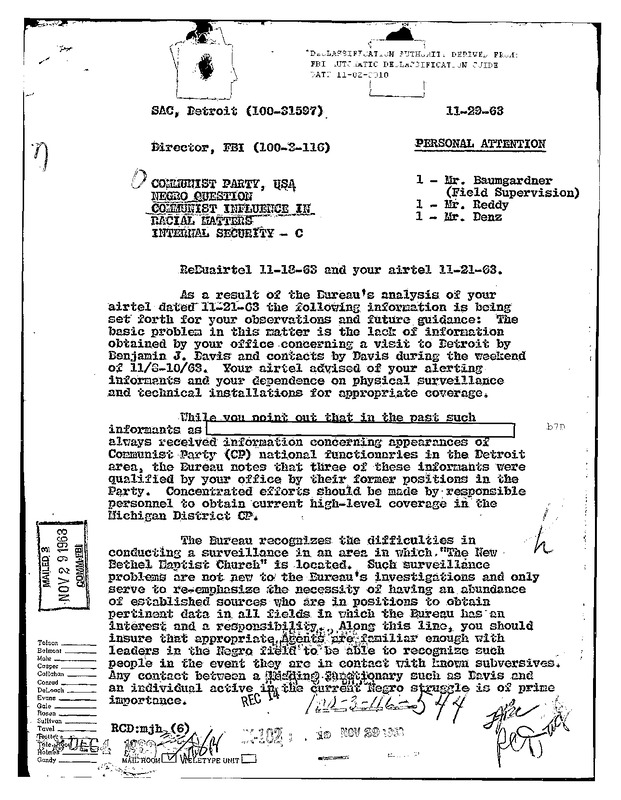
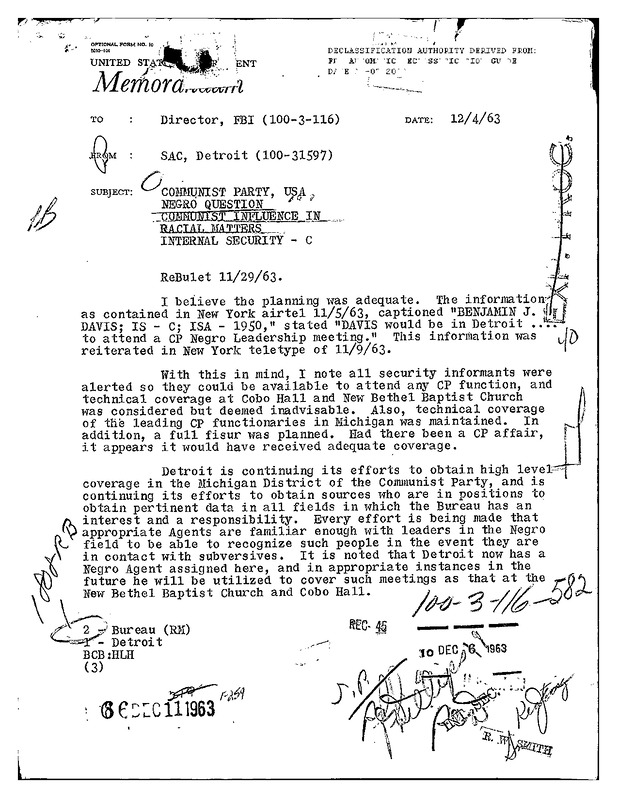
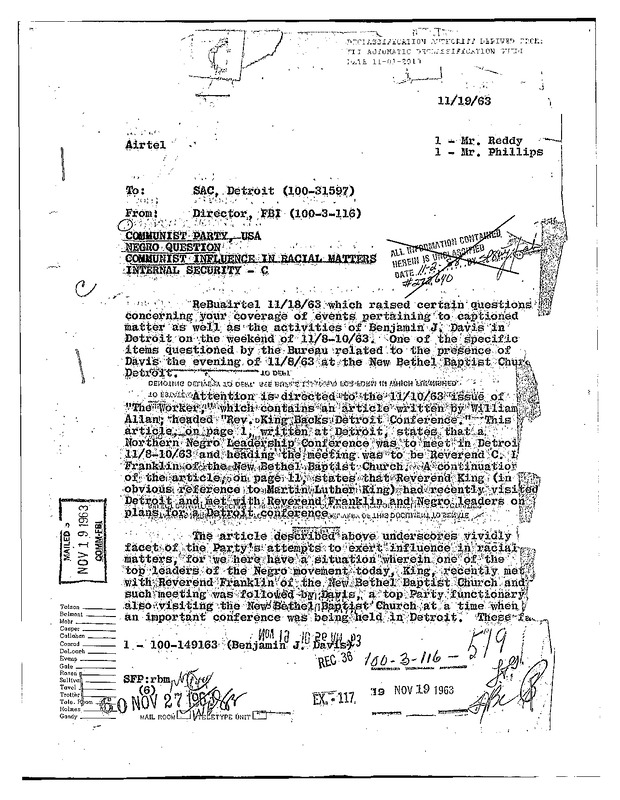
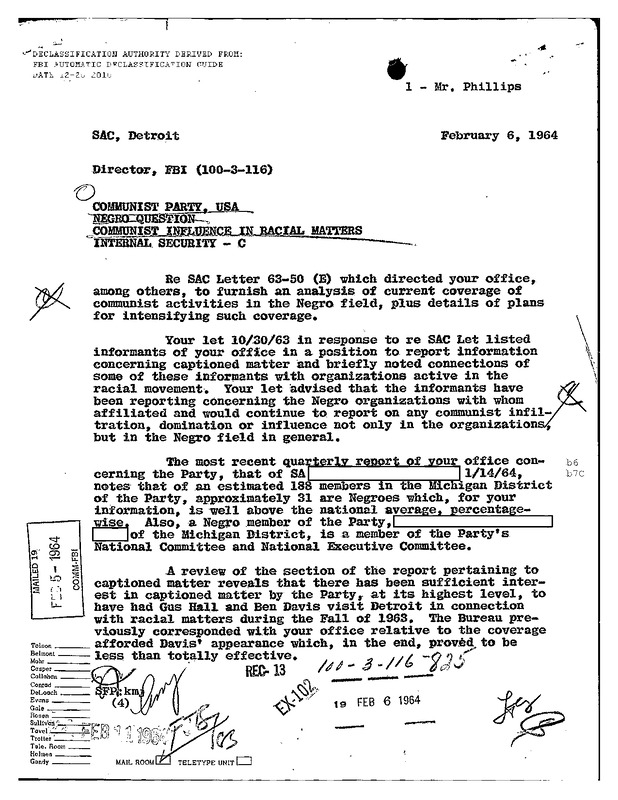
Memo from FBI headquarters criticizes the Detroit Field Office for insufficient surveillance of prominent communist and Black civil rights leaders during Benjamin J. Davis’s visit on November 8–10, 1963. The headquarters emphasizes the need for better coverage, citing concerns over the Communist Party’s interest in influencing the sensitive Civil Rights Movement and advancing its agenda.
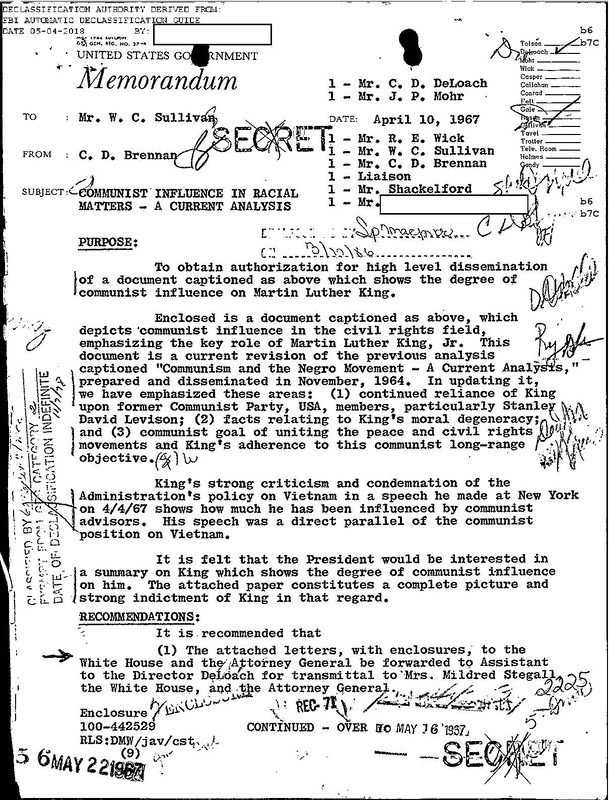
This report scrutinizes Martin Luther King Jr.’s supposed connections to communism, primarily because of his opposition to the Vietnam War. The FBI expresses concerns that these alleged ties endanger both the status quo of the civil rights movement and the nation. The document details King's relationships with known communist figures such as Hunter O'Dell, Bayard Rustin, and Stanley David Levison, and examines his personal conduct, including extramarital affairs, as part of their campaign. Informant-sourced data is included, and the FBI concludes that King’s motivations are politically influenced, not religiously or morally driven, characterizing him as a national risk.
36-page excerpt from a 200-page FBI report examines Communist Party activities in the United States, including strategies, tactics, and influence within racial organizations. The report covers several individuals under FBI surveillance associated with the CPUSA and the civil rights movement, such as MLK, Benjamin J. Davis, and Claude Lightfoot, among many others.
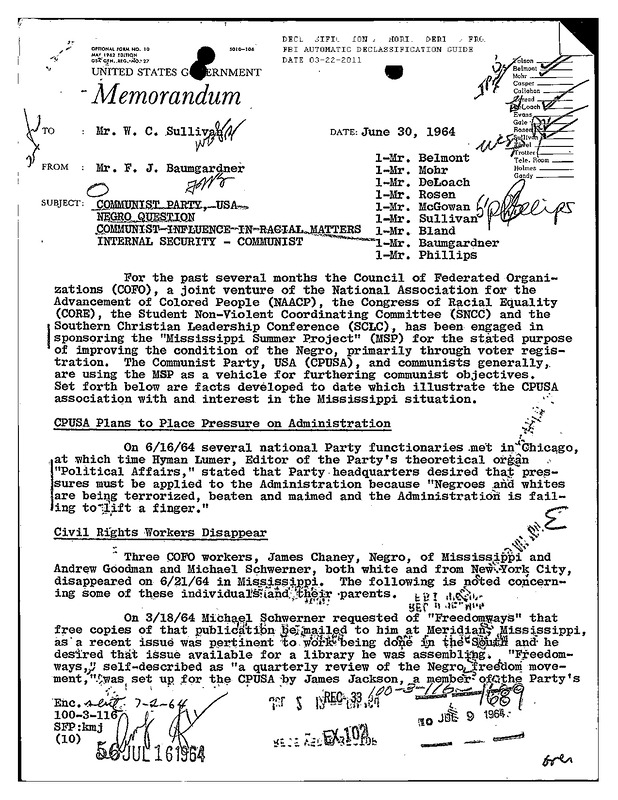
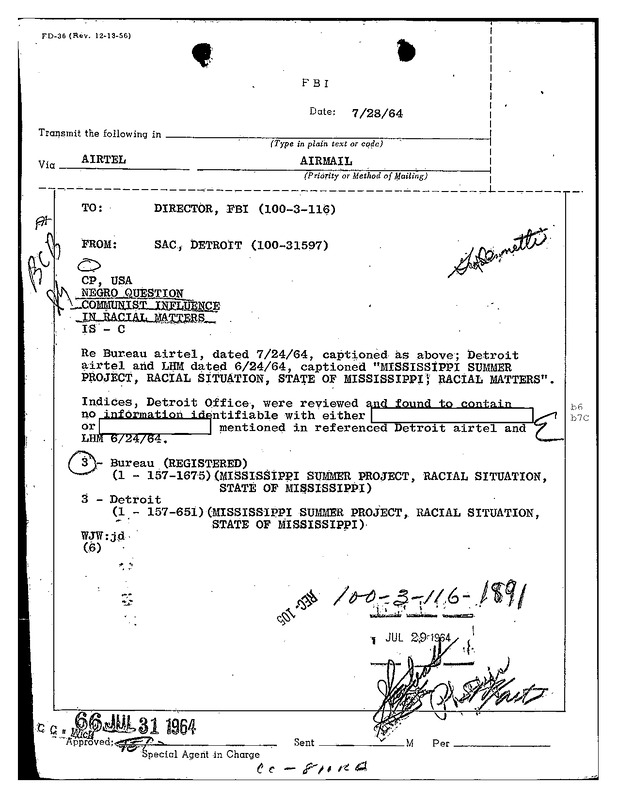
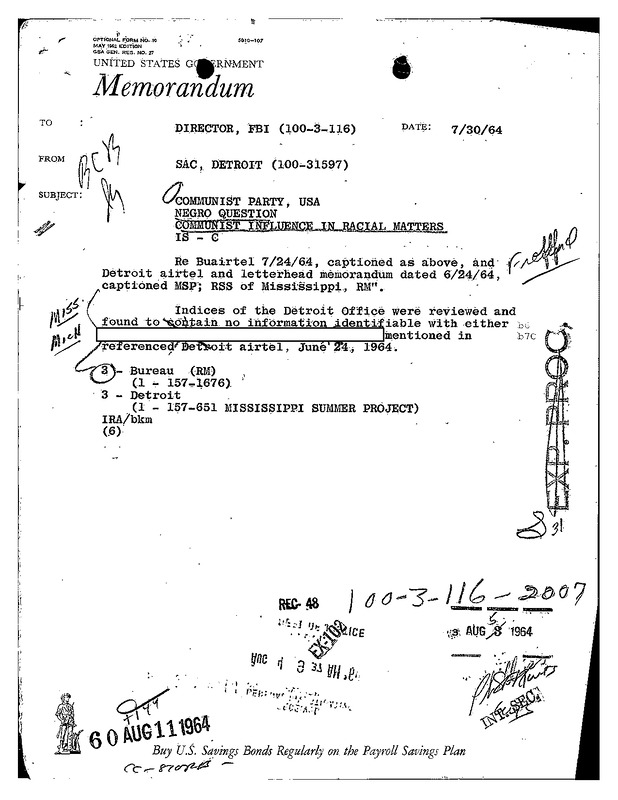
FBI report examining the Communist Party USA’s potential involvement in the Mississippi Summer Project (Freedom Summer), documenting surveillance of key CPUSA and Civil Rights leaders, participants from various cities, and ordinary citizens. The report concludes with calls for the Bureau to broadly monitor individuals planning to participate in the Freedom Summer. This report was to be forwarded to Walter W. Jenkins, Special Assistant to the U.S. President.
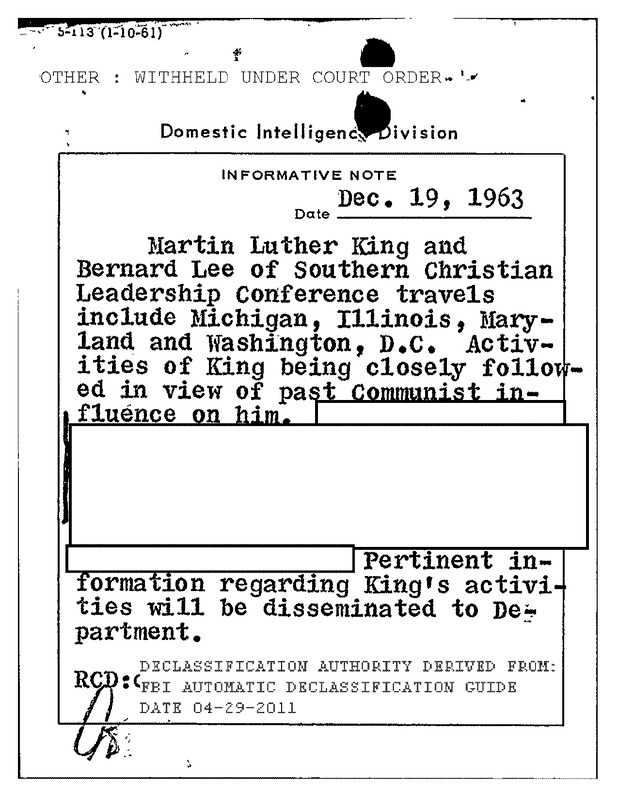
This document contains flight logs and travel details of Martin Luther King Jr. and his associates as they travel to Michigan, Illinois, Maryland, and Washington, D.C. Monitoring occurred due to MLK’s prominence in the Civil Rights Movement and suspected connections to communism.
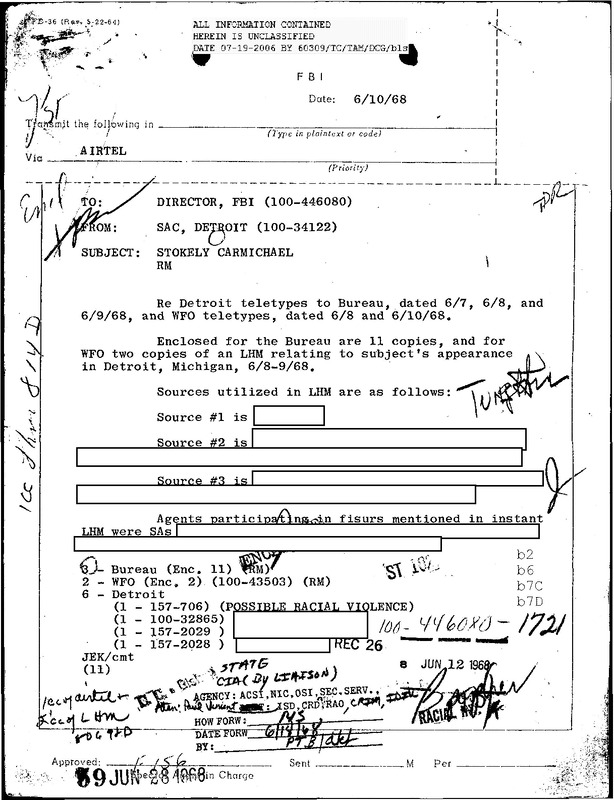
This document details FBI surveillance of Stokely Carmichael during his visit to Detroit from June 7–10, 1968, including informant and agent efforts to track his schedule and reconstruct his speech despite increased security. Carmichael’s remarks continued his sharp criticism of U.S. oppression domestically and internationally.
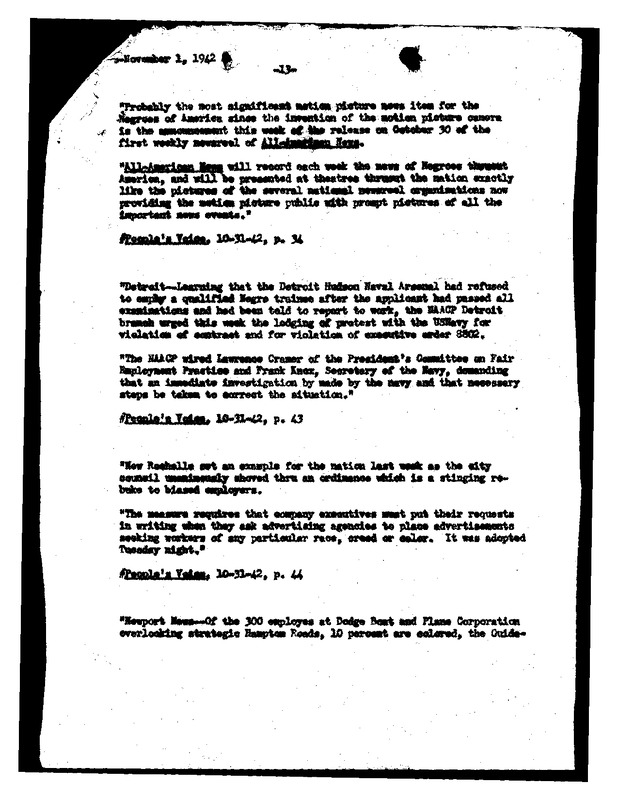
Single page from a longer report, highlighting direct quotes from the Black publication The People’s Voice. The selected quotes pertain to mistreatment of Black Americans.
Several pages listing COINTELPRO files reported "missing" to the Bureau and communications between FBI officials attempting to find them. This set of documents also contains an article highlighting the blowback of the FBI’s COINTELPRO program, after declassified records revealed the FBI sent anonymous letters to State Legislators and U of M Regents to disrupt the “New Left”, resulting in 3 U of M teachers/faculty members being released.
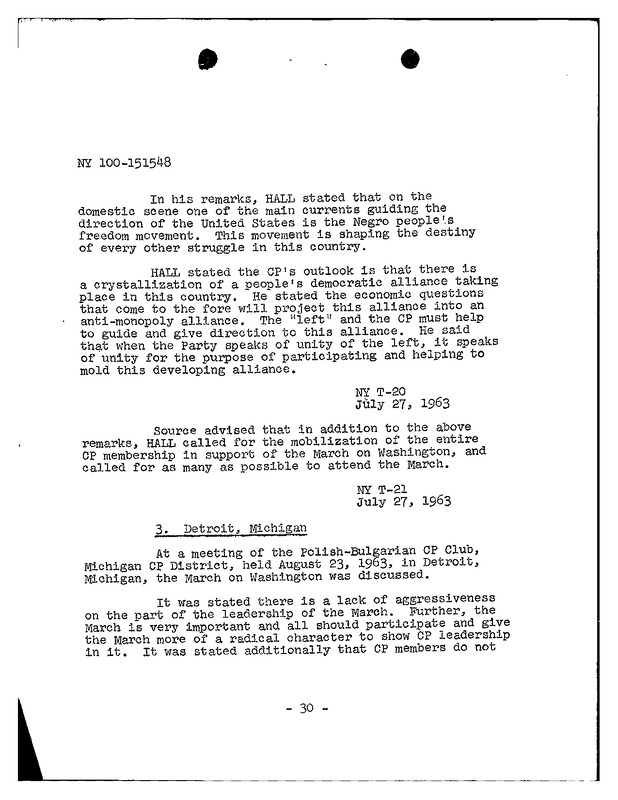
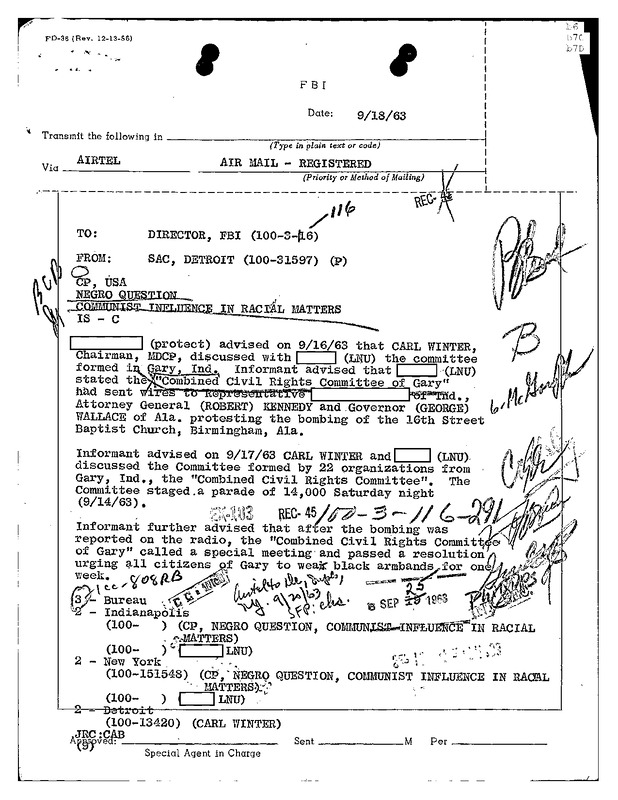
This document features informant reports on Gus Hall’s statements in New York about growing democratic alliances and the Communist Party’s role in uniting the left. It also covers discussions at a Detroit CPUSA meeting regarding party involvement in the March on Washington and similar organizing efforts underway in Philadelphia.
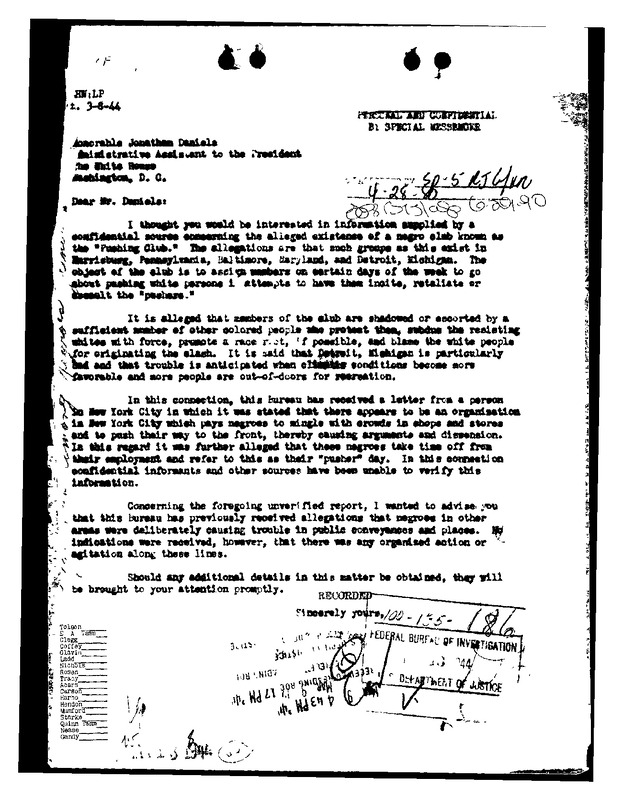
Series of memos sent from J. Edgar Hoover to various contacts in U.S. government alerting them of supposed “Pushing Clubs” that were popping up in cities across the United States. A confidential informant alerted Hoover that groups of Black folks would shadow a “pusher”, someone that would push whites, in hopes they would respond and incite a race riots. These individuals were allegedly paid by another group that had yet to be determined. Hoover was looking into the matter, but was unable to verify the accuracy of these claims and was requesting additional details if they arose.
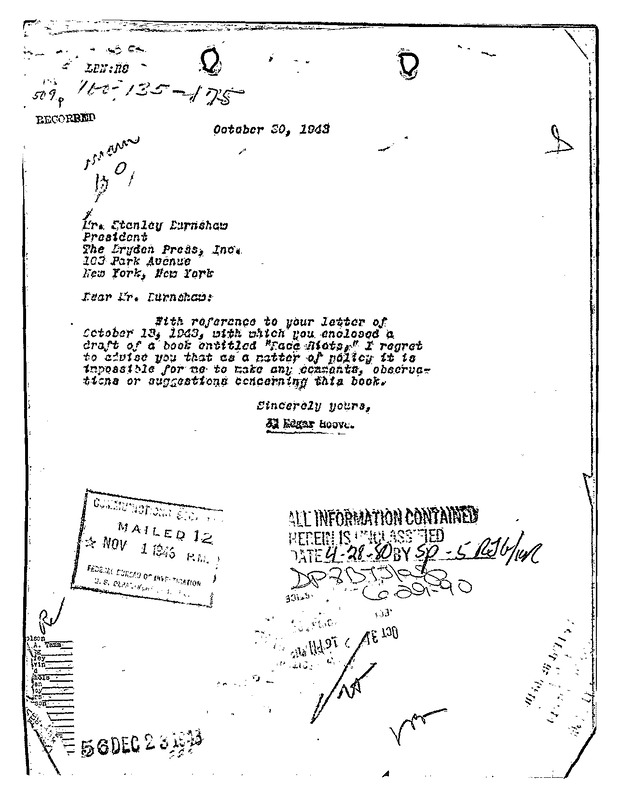
Response directly from J. Edgar Hoover to Stanley Burnshaw, who had requested his, and the FBI’s, opinion of the book “Race Riot” written by Alfred Lee and Norman Humphrey and discussing the Detroit Race Riot of 1943.
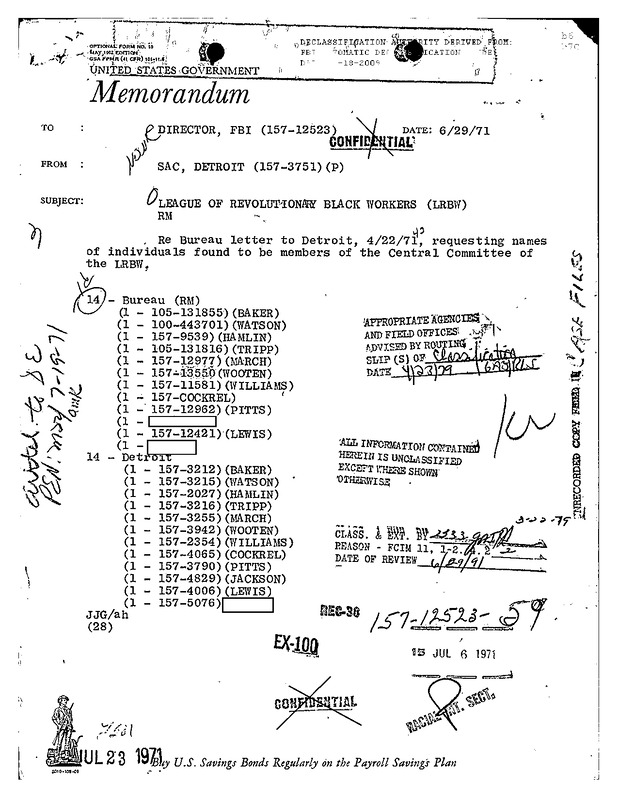
Index of individuals that were being surveilled by the FBI who were leader in the LRBW. Also includes the specific identifiers that the FBI used for these individuals in their communications.
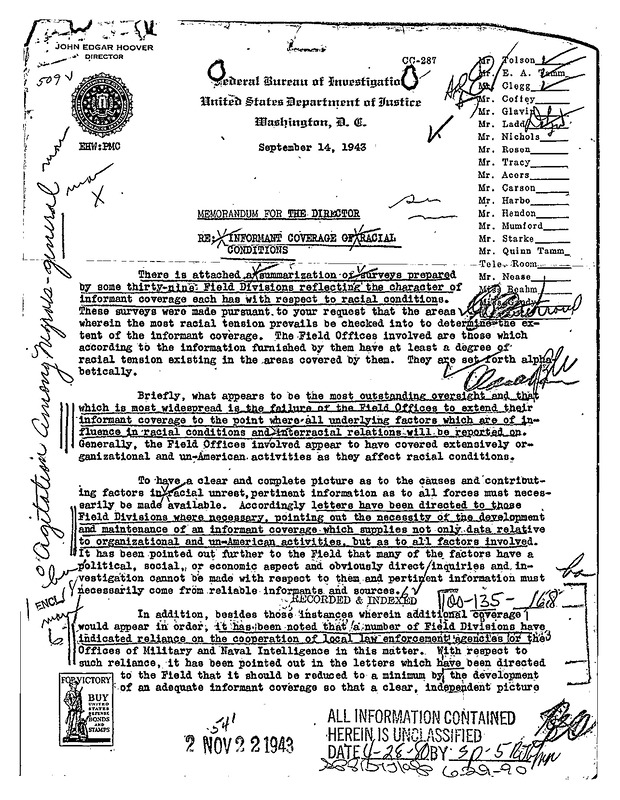
Memo sent to J. Edgar Hoover summarizing the surveys prepared by 39 FBI Field Offices regarding informant coverage with respect to racial conditions. Summaries indicate that Field Offices have done an inadequate job of extending coverage on racial conditions and there is significant cooperation with local law enforcement with agencies and Offices of Military and Naval Intelligences to gather information on racial matters. The last page of this document discusses work being done in Detroit, the Field Offices eight Black informants, and special agents providing information. It is important to note that this type of surveillance preceded the formalization of COINTELPRO. It is also contradictory to other memos stating that significant surveillance wasn’t taking place of Black and brown communities and sources of racial tensions/issues.
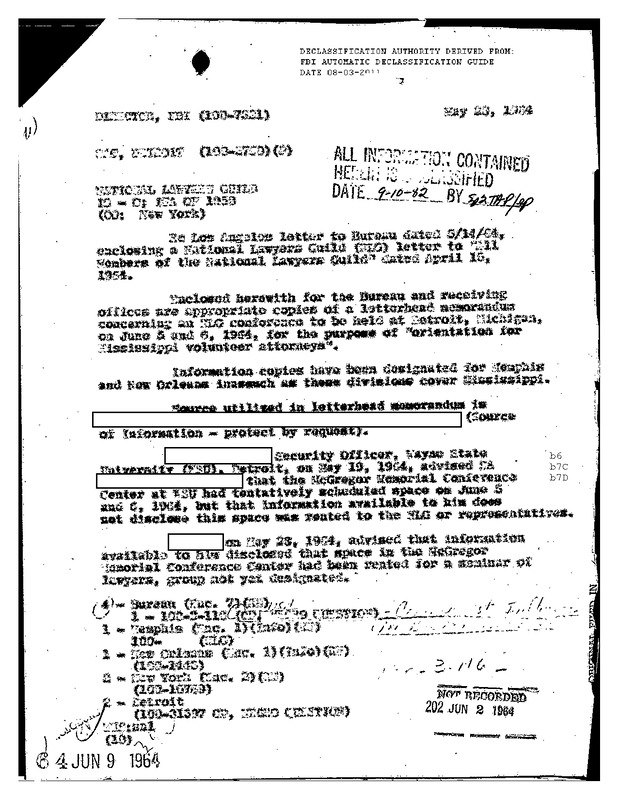
This document features details from an informant’s furnished letter and newsletter outlining the Mississippi Project, which recruited students, teachers, and legal advisors to support disenfranchised Black Americans in the South through legal counsel, voter registration, and school integration. The report concludes with claims that the National Lawyers Guild is a communist front.
Message from the Director of the FBI detailing the activities of Benjamin J. Davis and the issues of the newspaper "The Worker" detailing racial matters in Detroit.
Message from the Director of the FBI detailing the the importance of surveilling "racial matters", particularly Black communist members, of the Communist Party and the influence of Benjamin J. Davis and Gus Hall.
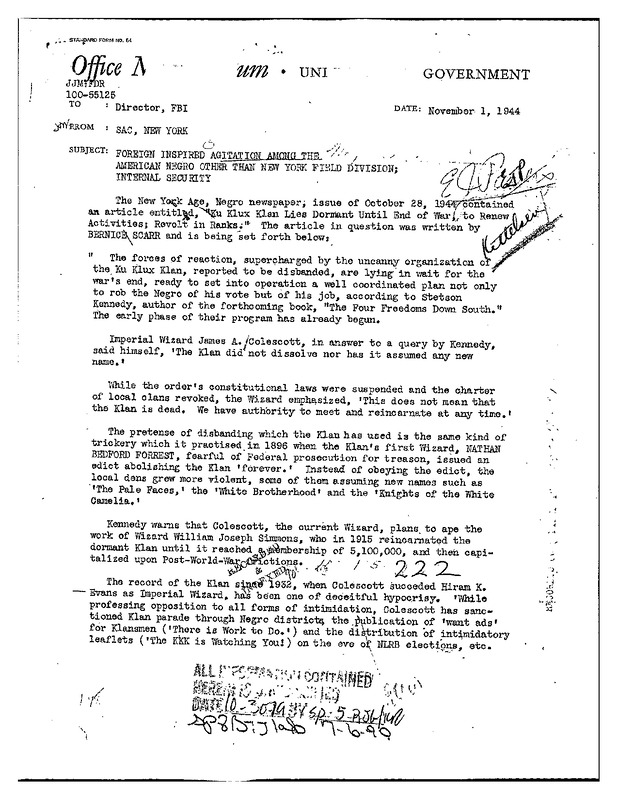
Select pages from an internal memo highlighting Japanese influence in the Black community during WWII. The FBI was concerned that the Japanese were fostering relationships and sympathizing with non-whites in the U.S., which was problematic for the war effort. The pages in this document focus largely on Detroit and Michigan specifically. Surveillance includes details on meetings, publications, and individuals of interest. It is important to note, although this is listed alongside COINTELPRO files, this surveillance took place prior to formal initiation of COINTELPRO in 1956. The type of surveillance here is a precursor to the further expansion of mass surveillance activities throughout COINTELPRO.
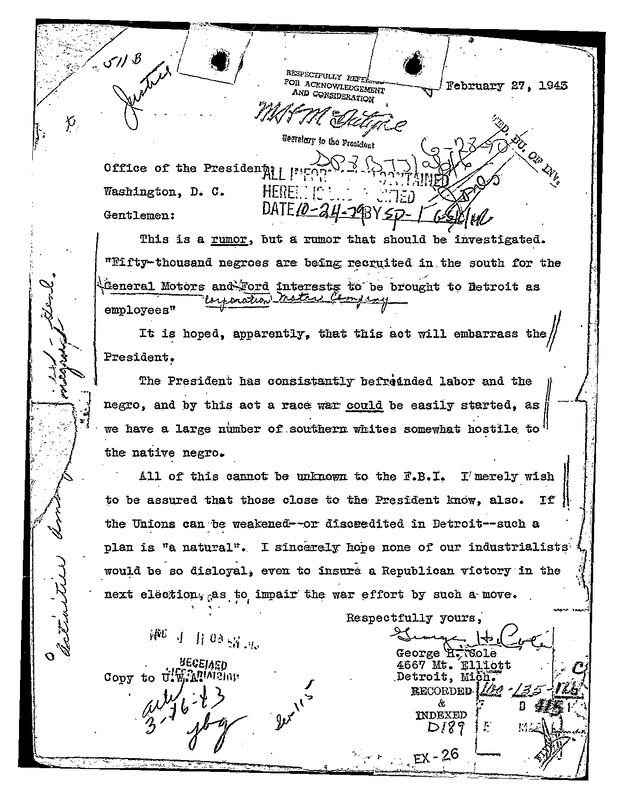
An FBI source sent a letter to the Office of the President to alert him, Franklin Delano Roosevelt, and the FBI, of a rumored recruitment of 50,000 Black workers from the South to General Motors and Ford as employees. The letter writer feared that this recruitment could start a race war given that there were many whites who were already hostile to Black folk.