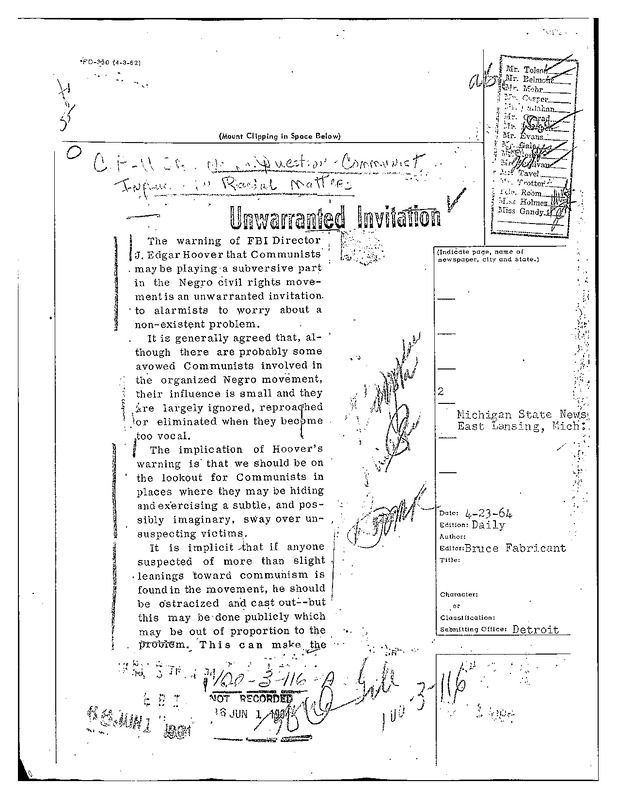
This newspaper article from Michigan State News criticizes the FBI and J. Edgar Hoover’s fear mongering about communist influence within the Civil Rights Movement, warning that such rhetoric undermines trust and threatens the progress made by Black Americans toward equality and democracy.
Newspaper clipping features Robert F. Kennedy’s denial that major Civil Rights groups are communist controlled. The article attempts to discredit prominent leaders like MLK Jr., Bayard Rustin, and A. Philip Randolph by linking them to communism. The FBI archived this piece to monitor public perception and potential future manipulation of racial issues.
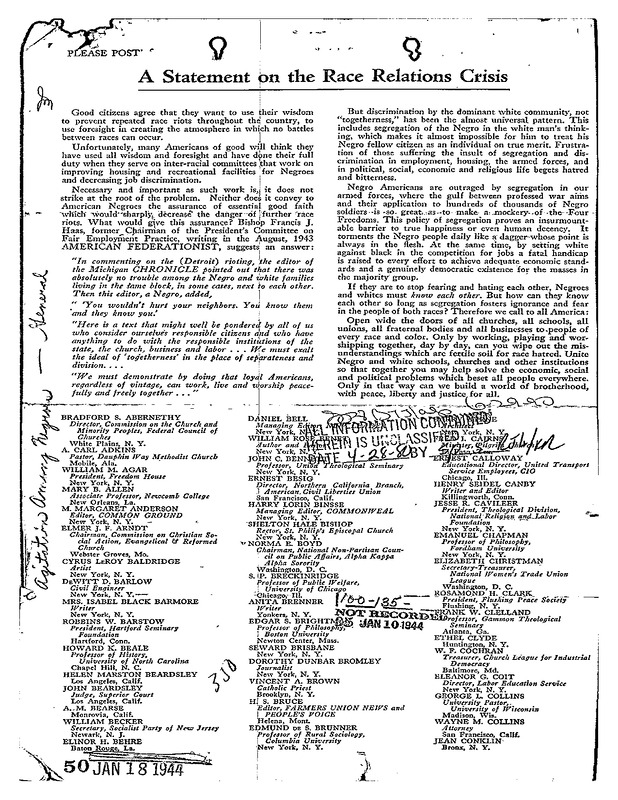
A statement published by Oswald Garrison Willard to end segregation and open the doors of “all churches, all schools, all unions, all fraternal businesses, and all businesses” to end racial violence and move towards tangible change as it pertains to improving relations in the U.S. This statement was signed by 317 signatories across the United States in support.
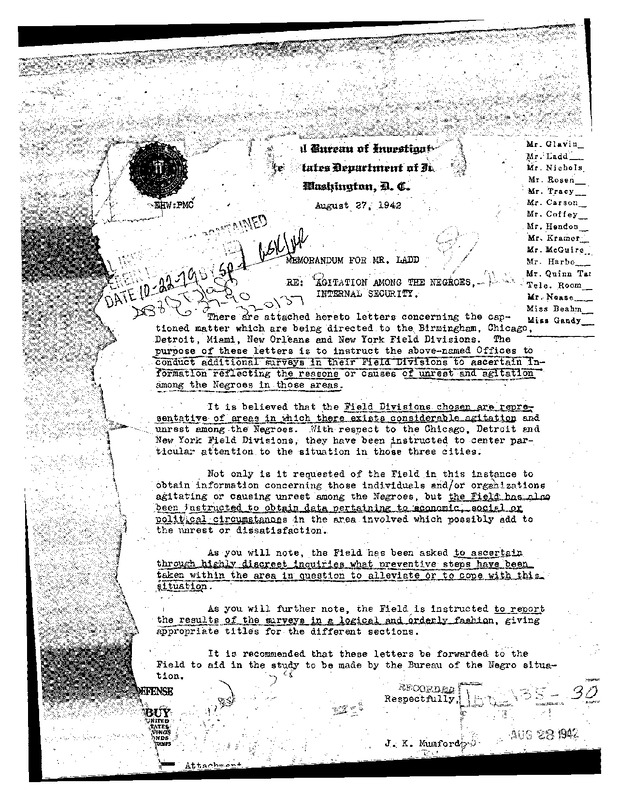
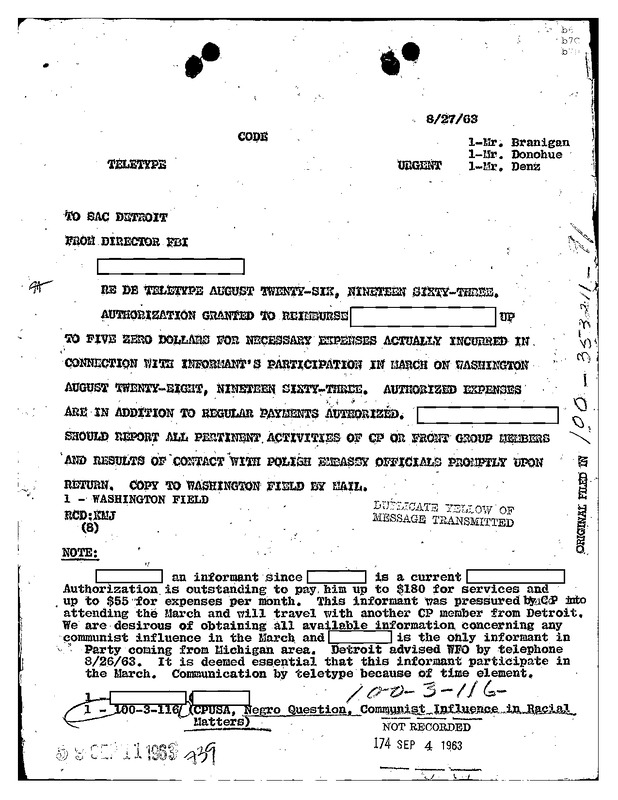
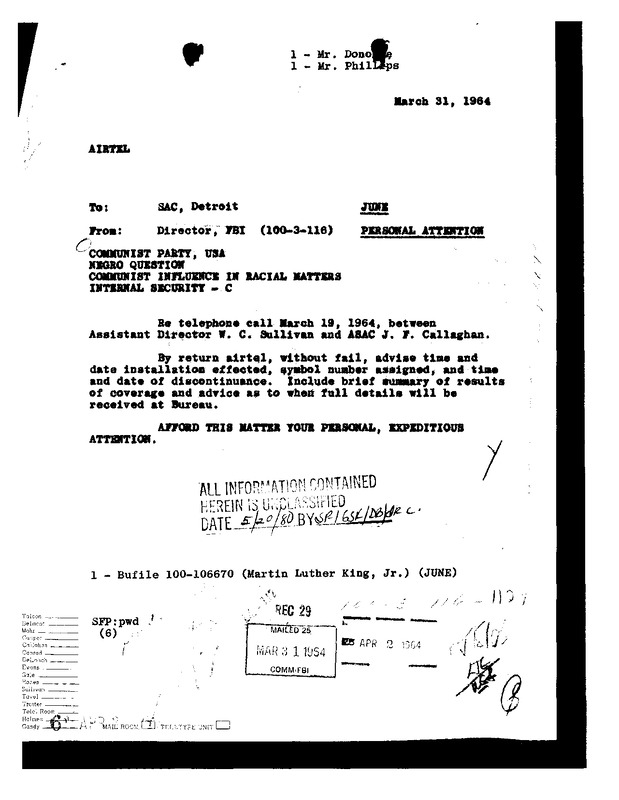
Internal memo sent to several FBI Field Offices, including Detroit, calling for increased surveillance to determine why “unrest and agitation” was occurring amongst the Black communities in their respective districts. It is important to note, although this is listed alongside COINTELPRO files, this surveillance took place prior to formal initiation of COINTELPRO in 1956. The type of surveillance here is a precursor to the further expansion of mass surveillance activities throughout COINTELPRO.
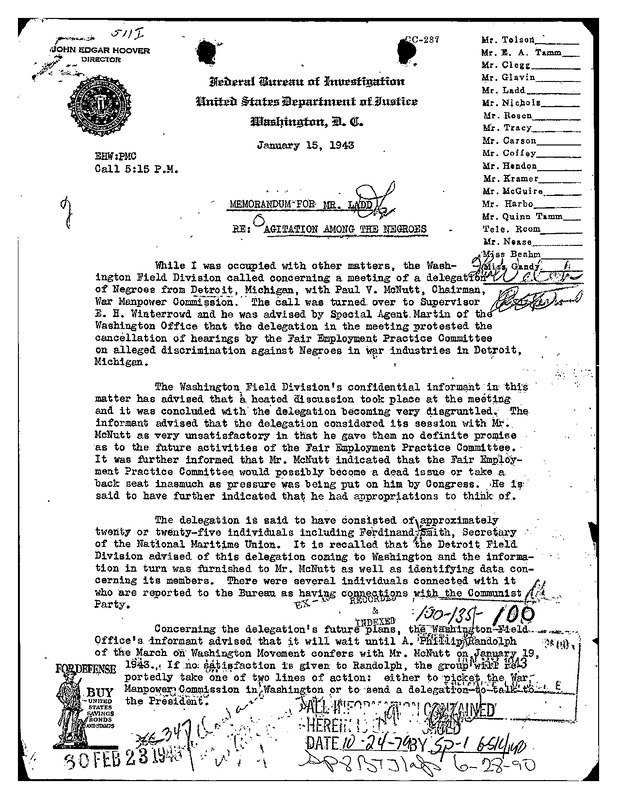
Series of memos and newspaper clippings detailing a meeting that was to be held between Paul V. McNutt, chairman of the War Manpower Commission, and a delegation of Black leaders from Detroit protesting the cancellation of hearings by the Fair Employment Practice Committee regarding the discrimination against the Black community in the war industries. While a meeting was originally scheduled, McNutt refused to meet with the group, leading to protests.
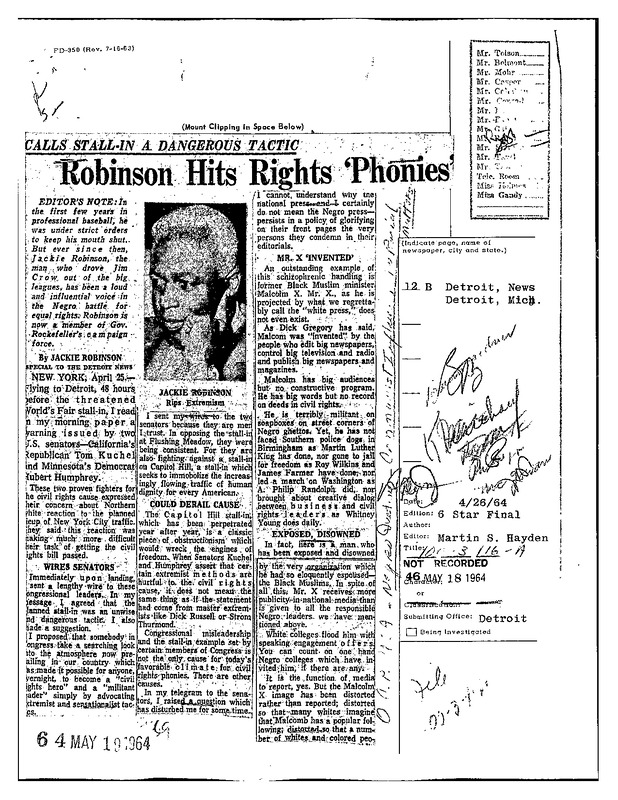
Newspaper article, penned by Jackie Robinson, critiquing the national press’s fear mongering that focuses on “extremists”, like Malcolm X, rather than highlighting the broader fight against oppression led by Civil Rights leaders. Robinson urges Congress and the president to move beyond rhetoric and enact real change and calls for Black leadership to assertively challenge media hypocrisy and ensure their voices are heard.
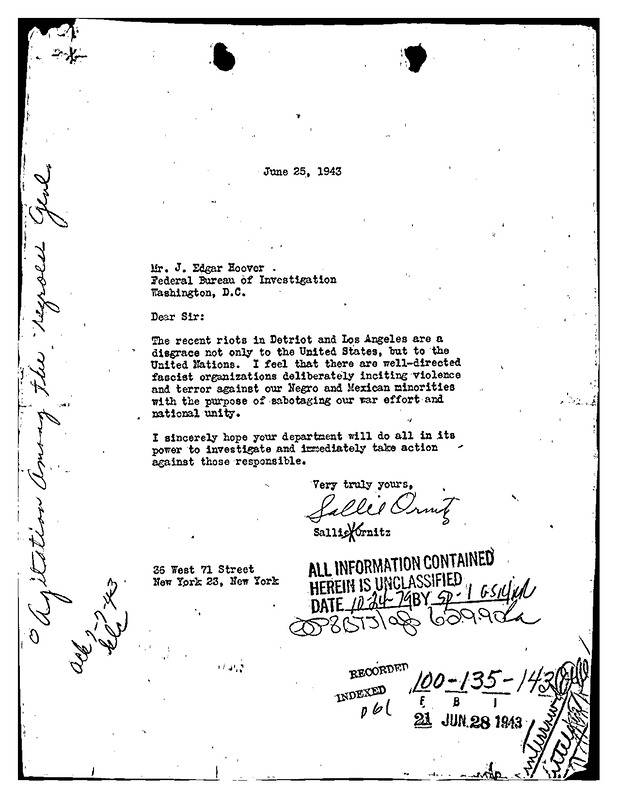
Letter sent from a citizen regarding what they believed was fascist influence in the race riots that had occurred in Detroit and Los Angeles. They believe this “terror” was happening against Black and Mexican communities to sabotage the war efforts. The letter writer believed that the FBI should take action and investigate the matter fully. . It is important to note, although this is listed alongside COINTELPRO files, this surveillance took place prior to formal initiation of COINTELPRO in 1956. The type of surveillance here is a precursor to the further expansion of mass surveillance activities throughout COINTELPRO.
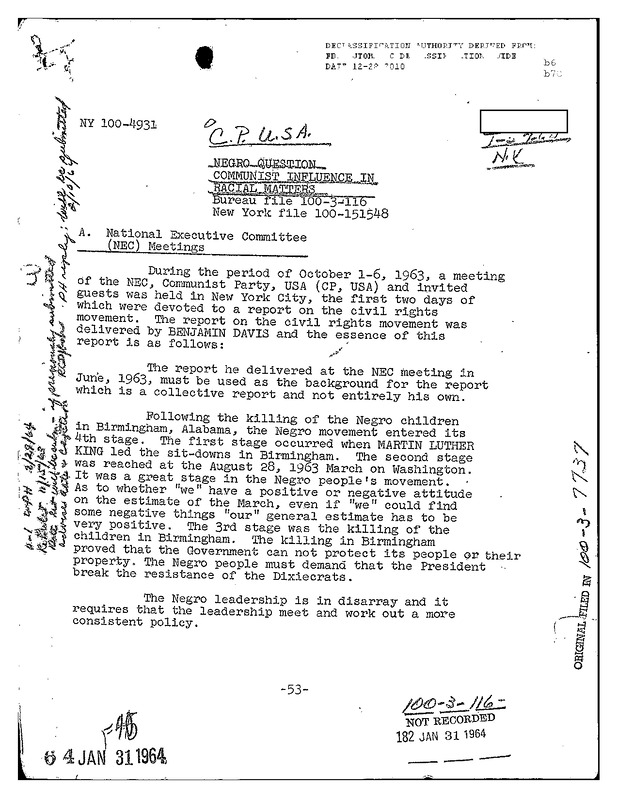
This 27-page document details meetings, writings, and speeches from the Civil Rights and emerging Black Power movements across the United States during the Fall 1963. It offers in-depth coverage of discussions on mobilization, coalition-building within the Black diaspora, and combating racism, with much of the information sourced from Communist Party interactions, internal reports, and collaborations with other groups.
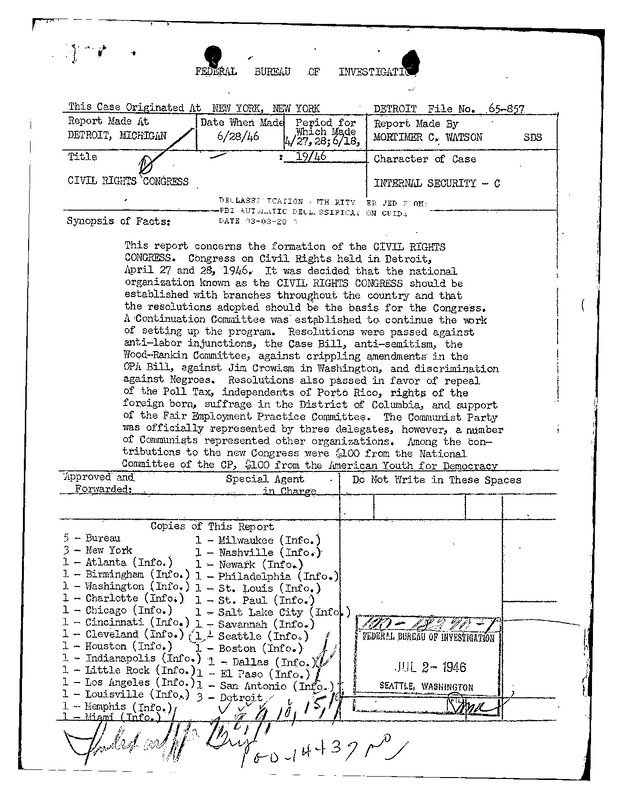
This pre-COINTELPRO report documents FBI surveillance of the founding of the Civil Rights Congress in Detroit, held April 27–28, 1946. Informants provided information on pre-congress and event discussions addressing anti-labor injunctions, antisemitism, Jim Crow, poll taxes, and discrimination against Black Americans. The report details attendees, geographic representation, event sponsors, meeting minutes, resolutions, and amendments. These surveillance practices laid foundational groundwork for COINTELPRO’s later development.
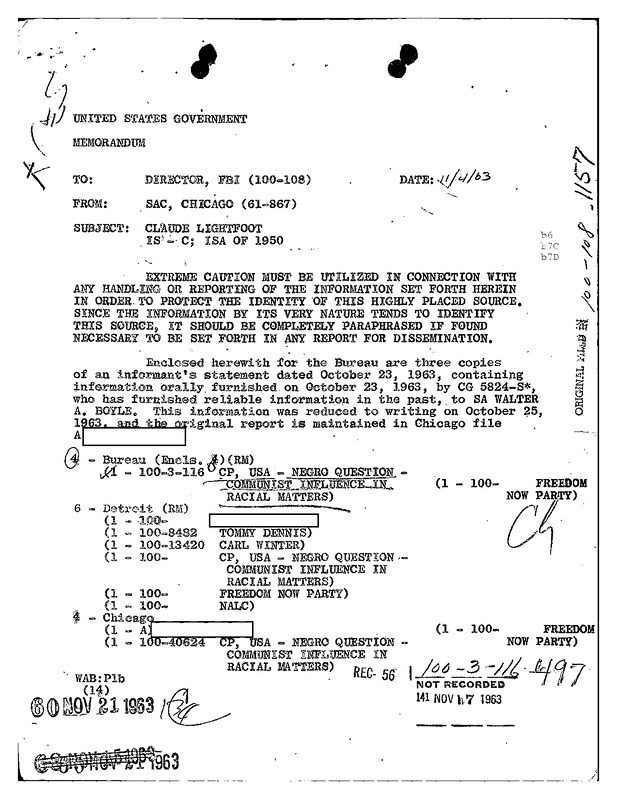
This document details Claude Lightfoot’s efforts at a Detroit meeting to establish and strengthen the Negro-American Labor Council (NALC), an organization modeled after the Freedom Now Party, aiming to build influence and unify its members.
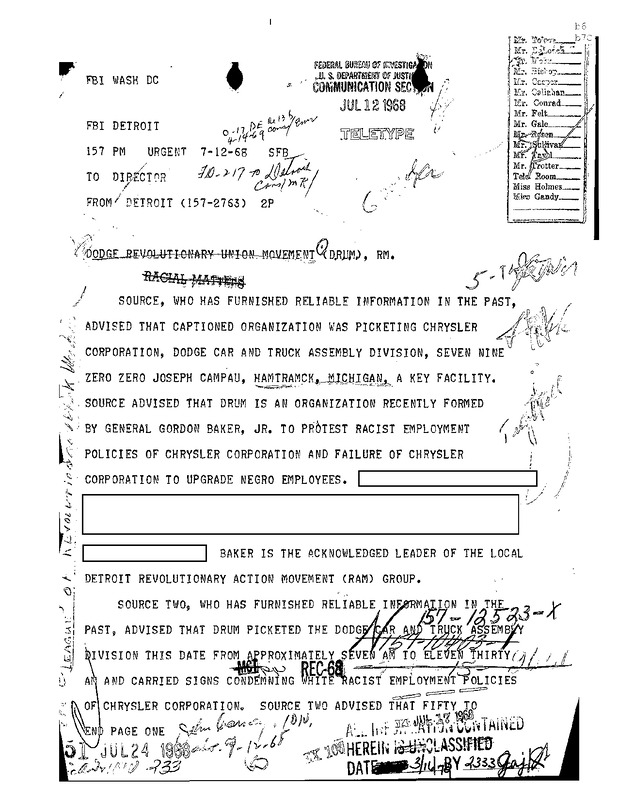
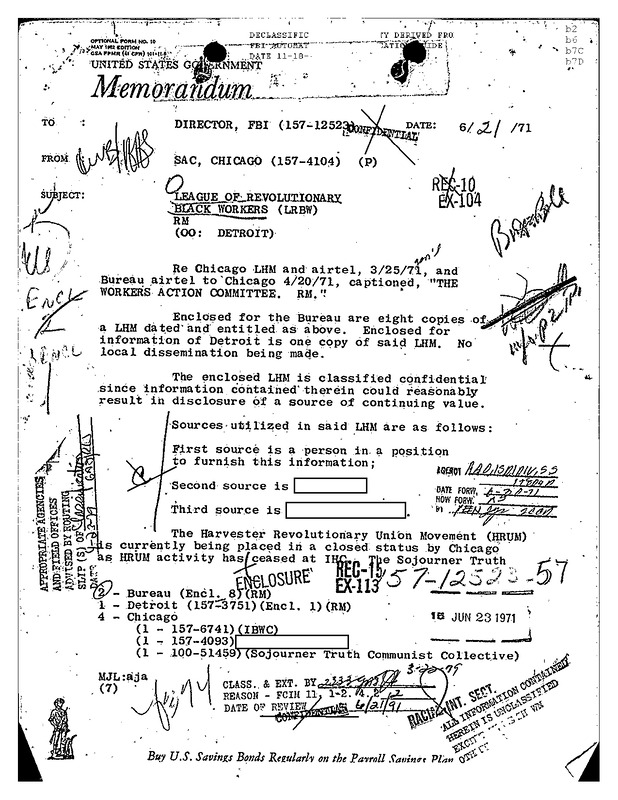
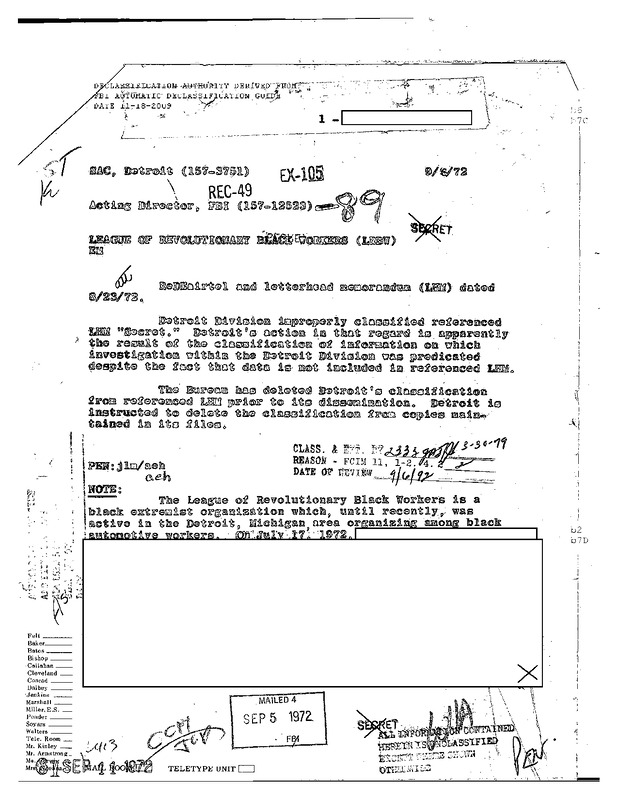
This comprehensive report documents FBI surveillance of the Dodge Revolutionary Union Movement (DRUM), Revolutionary Action Movement (RAM), and the League of Revolutionary Black Workers (LRBW), detailing their roles, key figures, events, and objectives. The report covers protests and picketing at several Detroit factories, led by figures like General Gordon Baker, Jr., and tracks union formations at Dodge, Eldon Avenue, Ford River, Jefferson Ave, United Parcel Service, and others. It examines the groups’ advocacy against racism and white capitalism, their calls to action, and their efforts to unite with other groups of color such as the Brown Berets. The report relies on informant disclosures, union newsletters, newspapers (like Inner City Voice and The Black Panther), protest posters, and communications from FBI Director Hoover regarding heightened surveillance.
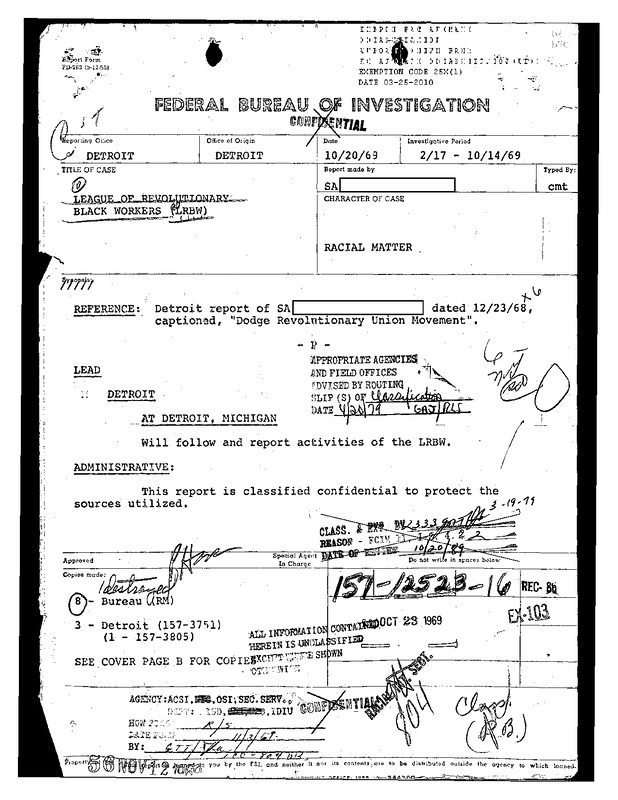
This 233-page document details extensive FBI surveillance and investigation of the League of Revolutionary Black Workers (LRBW) and associated union groups at Detroit auto plants from February to October 1969, with continued coverage through 1971. The report examines finances, leadership, membership, publications, meetings, and demonstrations, including bank transactions and publications like Wildcat and Muhammad Speaks. It features internal agency debates about the LRBW’s threat level, discussions on leveraging Department of Labor pressure, and the handling of union election disputes. Highlights include intercepted communications, profiles of group members, surveillance of international outreach by LRBW leaders, and exchanges between FBI Director Hoover and the Detroit Field Office concerning strategy and agency image.
This collection of FBI files tracks the expanding international influence and internal dynamics of the LRBW, highlighting their trip to Copenhagen, meetings with North Vietnamese officials, and relationships with other U.S. revolutionary groups. The documents feature translated Danish flyers, detailed surveillance of group leaders, and news excerpts illustrating splits within the LRBW, including the formation of new organizations like the Black Workers Congress (BWC) and Communist League (CL). Surveillance efforts also reveal the FBI’s tactics in exploiting internal tensions and closely monitoring offshoots, front organizations, and youth self-defense movements. The files include extensive reporting on finances, membership, cross-city connections, especially with Chicago groups, and the ongoing absorption and transformation of the LRBW.
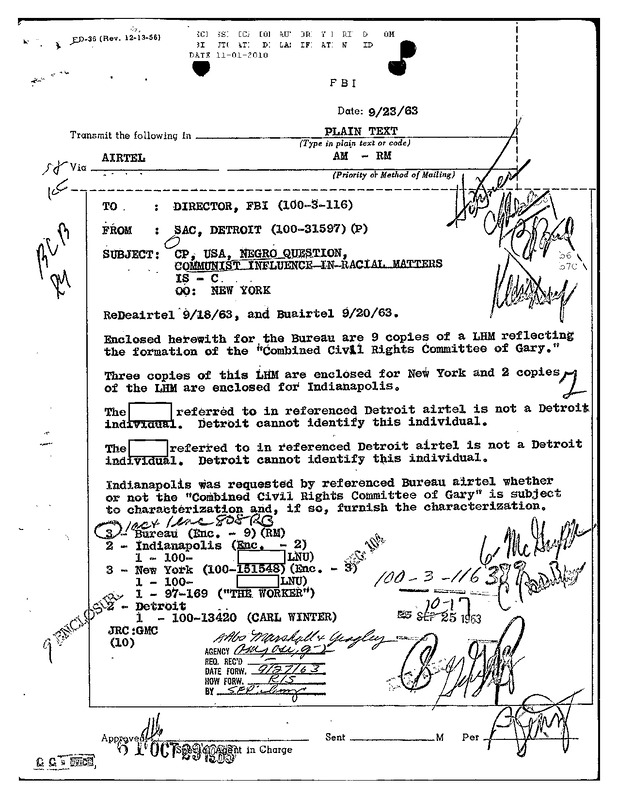
This document details the formation of the Combined Civil Rights Committee of Gary, uniting 22 local organizations to fight discrimination and respond to the 16th Street Baptist Church bombing. Carl Winter met with a committee member, and the group sent telegrams to key officials. Citizens, including school children, wore armbands in protest, as reported by The Worker, a communist publication.
198-page report includes FBI documentation of deleted files and court-ordered redactions, along with lists of targets and informants—featuring organizations and individuals such as SNCC, NAACP, CORE, Freedom Now Party, TULC, NALC, John Conyers, Carl Winter, Ben Davis, and Coleman Young, among many others. The bulk of the report consists of highly detailed surveillance on civil rights and “communist-labeled” activism in Detroit and Southeast Michigan, covering people, organizations, protests, conferences, press releases, and informant statements from September through October 1964. The collection demonstrates the breadth and intensity of COINTELPRO operations in the region.
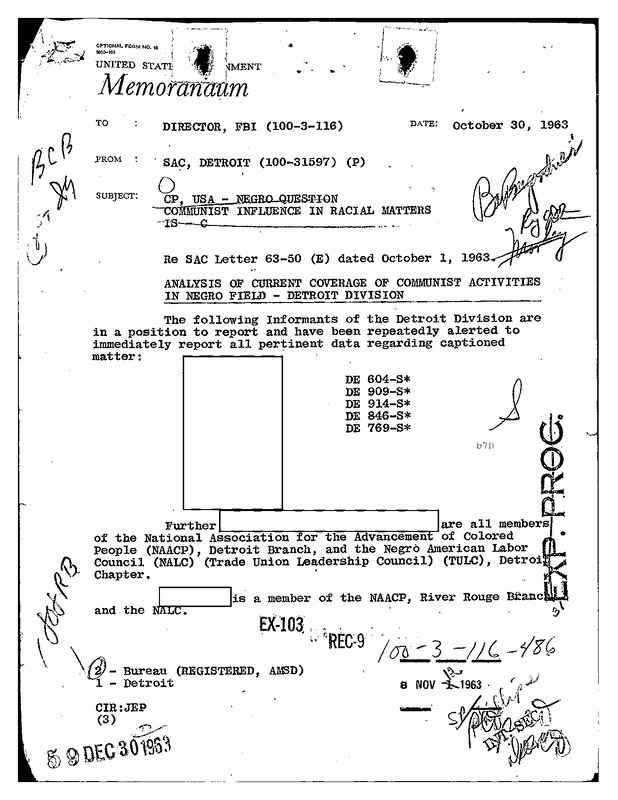
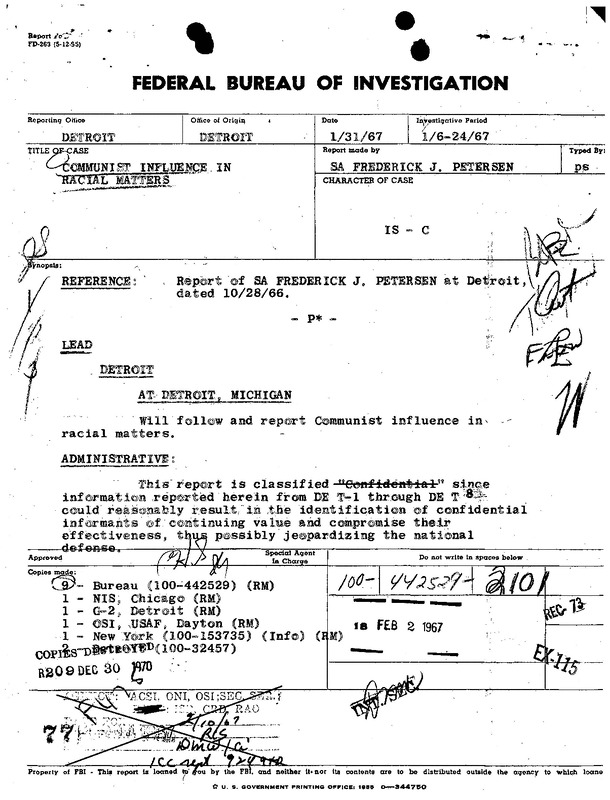
Tenth available report in a series on communist influence in civil rights activity in Detroit. Investigation occurred during January 1967. FBI describes the report as: “At Michigan District Communist Party meetings October to December, 1966, “black power” and the status of the Negro in the local community, including CP involvement, discussed. On 11/4/66, at a Friday Night Socialist h Forums meeting held in Detroit, Michigan, Betsy Barnes, National Secretary of the Young Socialist Alliance spoke of the current plight of the Negro and the effect of “white backlash”
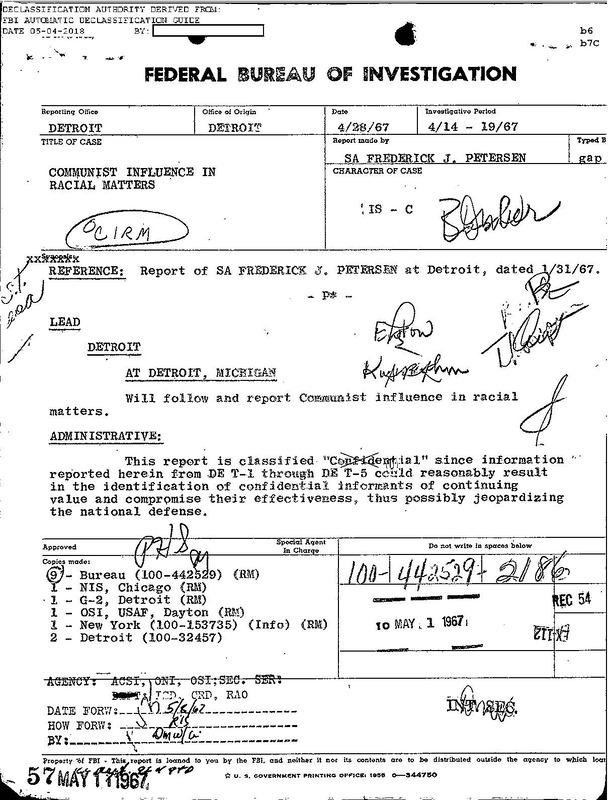
Eleventh available report in a series on communist influence in civil rights activity in Detroit. Investigation occurred during April 1967. FBI describes the report as: Negro and white unity named as CP (Communist Party) rallying point by CP national functionary. During 1/67 to 3/67, recruitment of Negroes by CP stressed at MDCP (Michigan District Communist Patty) meeting. Detroit SWP (Socialist Workers Party) and the SWP Youth Affiliate, the YSA (Young Socialists Alliance), currently concentrating on “Vietnam issue” rather than racial matters.
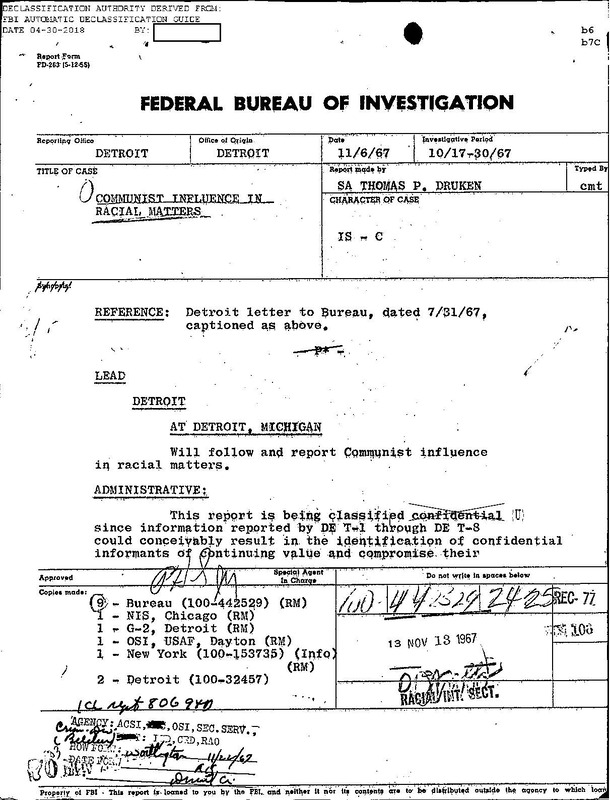
Twelfth available report in a series on communist influence in civil rights activity in Detroit. Investigation occurred during October 1967. FBI describes the report as: “Communist Party (CP) supported 7/67 Detroit rioting and refer to it as a “rebellion”, and not a riot. Recruitment of Negro youth emphasized by local Michigan District CP (MDCP) leader. Detroit SWP (Socialist Workers Party) and SWP youth affiliate, the YSA (Youth Socialist Alliance), continue to concentrate on “Vietnam Issue” and solicitation of signatures to place SWP on ballot in 1968 Michigan elections rather than racial matters.”
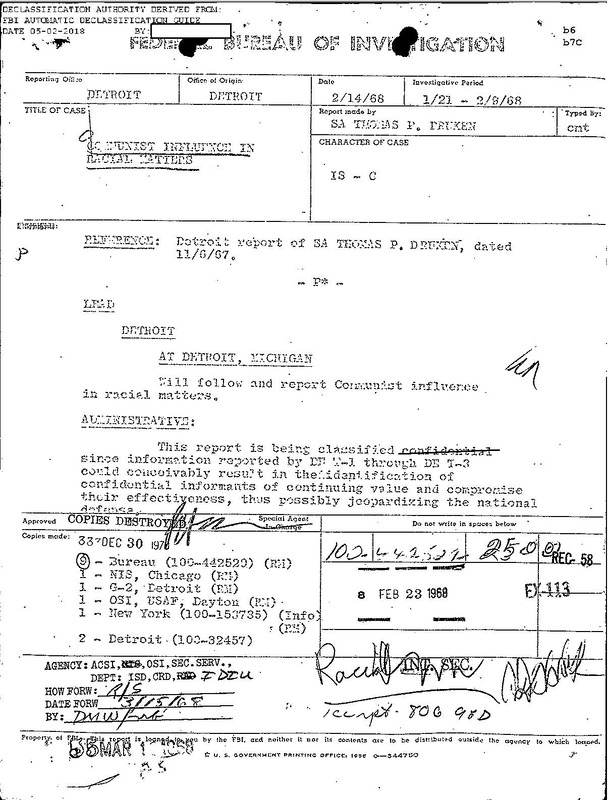
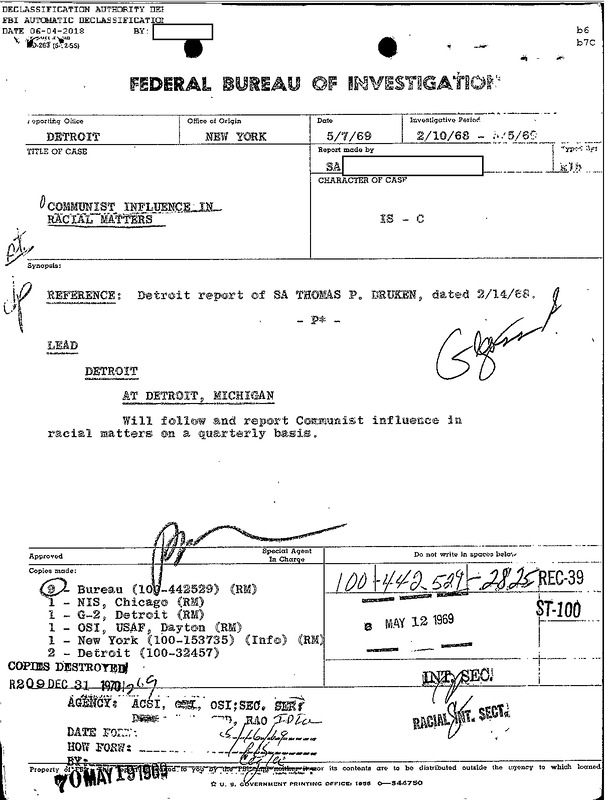
Thirteenth available report in a series on communist influence in civil rights activity in Detroit. Investigation occurred from January to February 1968. FBI describes the report as: “During a meeting of State Board, MDCP (Michigan District Communist Party), held on 10/30/67, at Detroit, Negro freedom struggle in the U.S. discussed. During State Committee meeting 11/67, at Detroit, it was indicated that Party must fight for Negro community and furnish financial support to Black Nationalists. During State Board meeting of MDCP held during 1/68, at Detroit, Thomas Dennis stated the CP (Communist Party) would demand that all police cars in Negro communities contain all black officers. Further, that the Negro community is angrier now than ever. Detroit SWP (Socilaist Workers Party) and SWP Youth Affiliate the YSA (Youth Socialist Alliance) continue to concentrate on the Vietnam issue and solicitation of signatures to place SWP on ballot.”
Fourteenth available report in a series on communist influence in civil rights activity in Detroit. Investigation occurred from February to April 1968. FBI describes the report as: “Local MDCP (Michigan District Communist Party) meetings aimed at increased recruitment among members of LRBW (League of Revolutionary Black Workers) and other groups of black militants in Detroit, including BPP. MDCP will attempt to exploit police brutality upon Negroes. No direct influence exerted upon groups to date by MDCP, and no freight influence noted. Publications reveal no racial overtones. Lenneth John Watson, Detroit black militant, appeared and spoke at Workers World Conference, New York City in 4/69. Arthur McPhaul, State MDCP Chairman, claims close contact and liaison with black nationalist groups. Black caucus of CP formed for black workers at Detroit area automotive plants.”