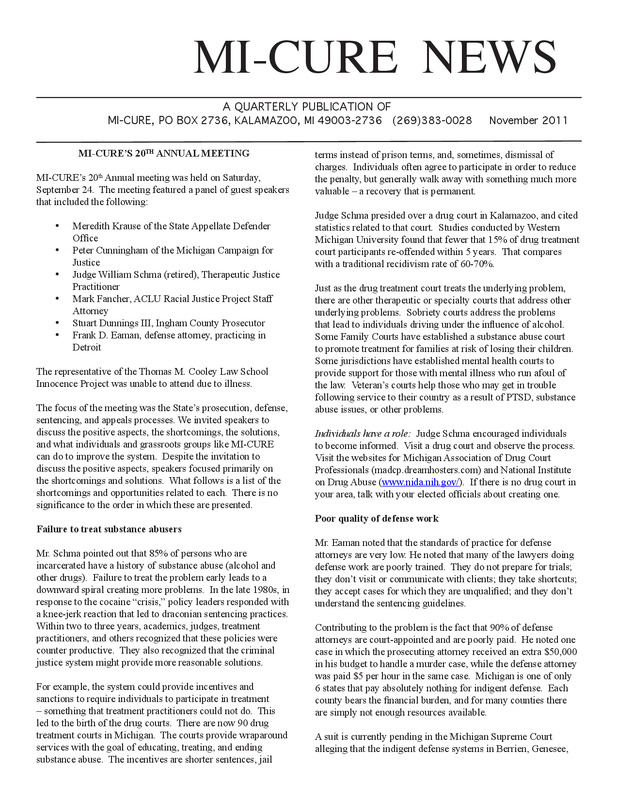
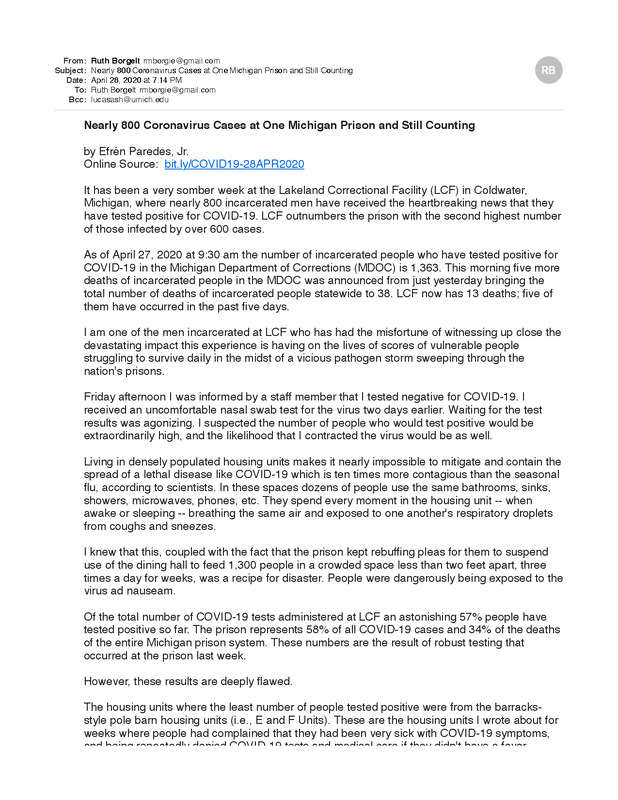
MI-CURE NEWS (November 2011) covering discussions on prosecution, defense, sentencing, and racial bias in the criminal justice system; substance abuse treatment, quality of defense work, racial profiling, and the need for reform in indigent defense; the closure of Mound Correctional Facility; privatization of healthcare services; and changes to prison food services.
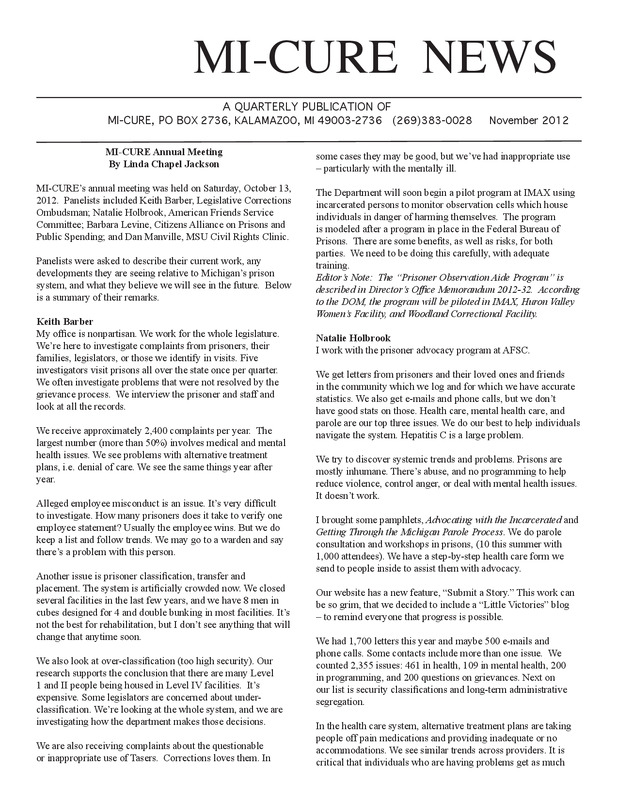
MI-CURE NEWS (November 2012) covering MI-CURE’s annual meeting including prisoner classification; overcrowding; misconduct investigations; use of tasers; healthcare, mental health; programming; long-term administrative segregation; rising prison costs; medical and mental health care litigation; parole violations, and juvenile life sentences.
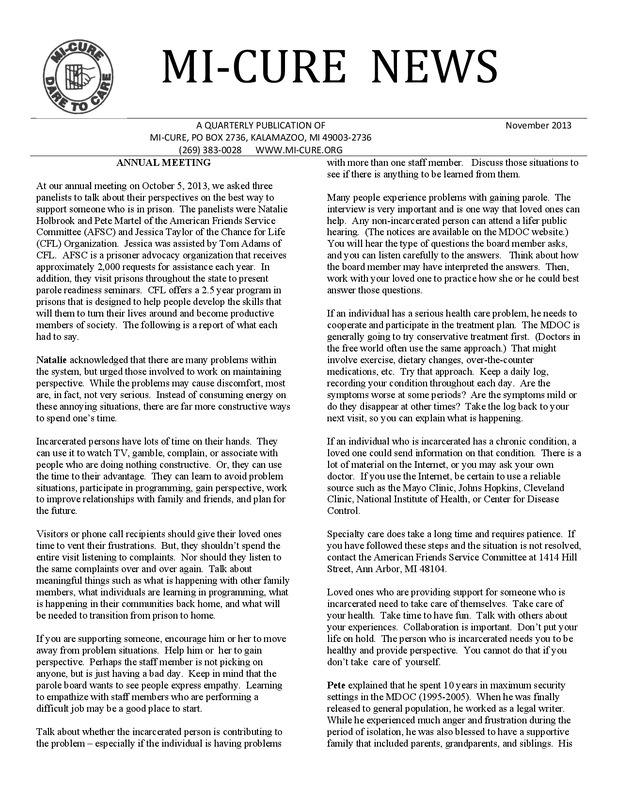
MI-CURE NEWS (November 2013) covering FCC ruling update on phone rates; continued concerns about Taser use in prisons; backlog in VPP, SOP, and T4C programs; food service privatization; Michigan’s failure to privatize prison operation; lawsuit over juvenile abuse in MDOC; mental health courts evaluation showing reduced recidivism; and MCO class-action lawsuit over unpaid overtime
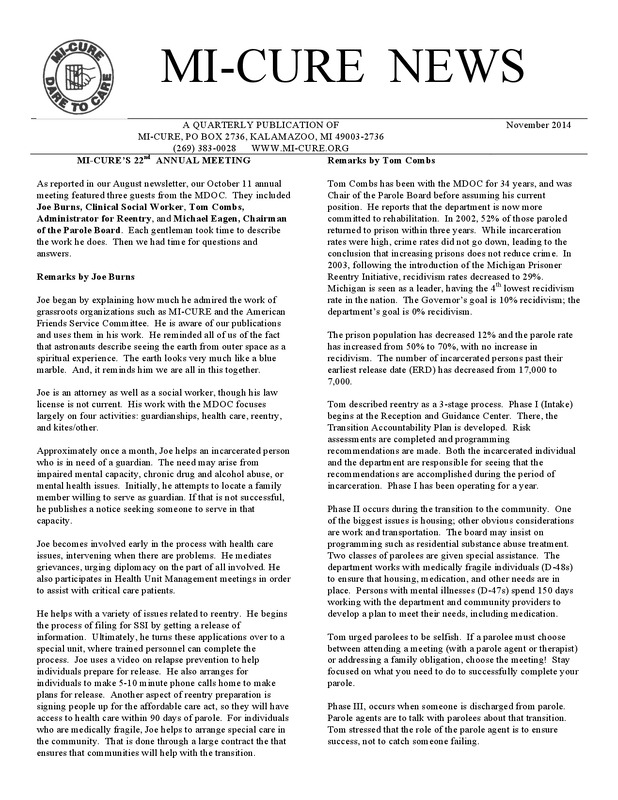
MI-CURE News (November 2014) covering MDOC officials discussing parole, reentry, and mental health care; updates on programming backlogs and vocational training initiatives; concerns about prison overcrowding and violence; the FCC’s efforts to regulate intrastate prison phone rates; developments in parole board procedures for lifers; a clarification on litigation regarding MDOC dental care; and advocacy efforts for policy changes to improve rehabilitation and reduce recidivism.
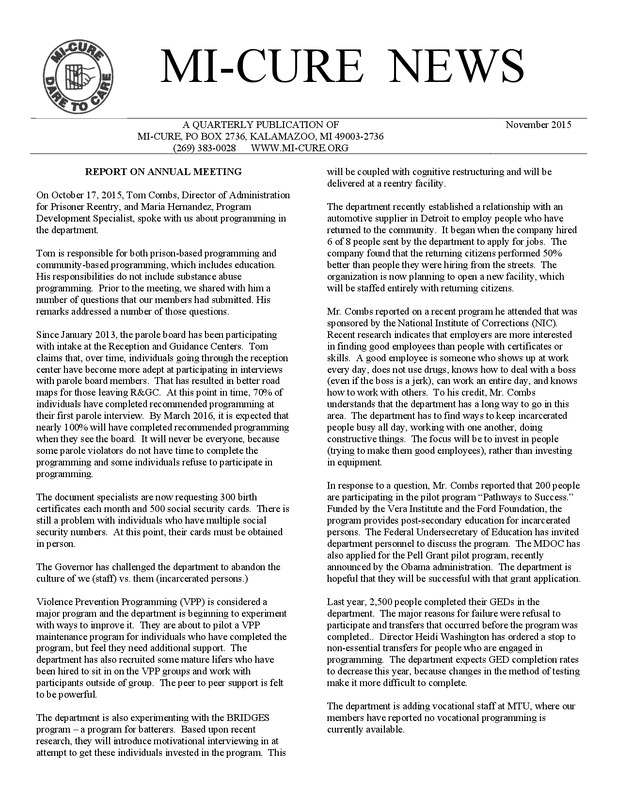
MI-CURE News (November 2015) covering MDOC officials’ report on programming improvements and parole readiness; efforts to expand GED completion, vocational training, and reentry employment partnerships; use of lifers as mentors; a statewide survey of incarcerated individuals on programming value, access barriers, and solutions; progress on tablet rollout and Pell Grant pilot application; FCC’s decision to cap prison phone call rates; court rulings on parole eligibility and prison conditions; and advocacy for expanded rehabilitative opportunities and fair parole practices.
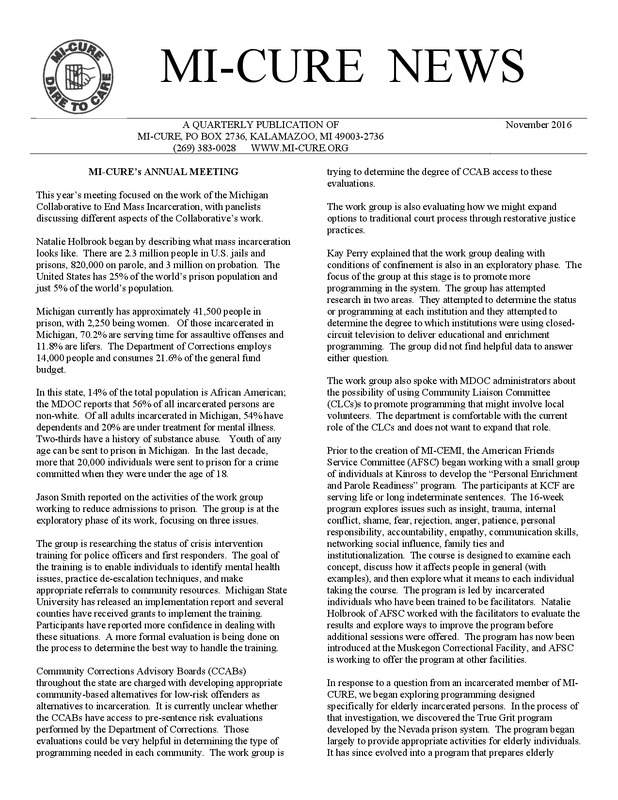
MI-CURE News (November 2016) covering legislative updates on parole, commutations, and juvenile justice reform; expansion of parole readiness and elderly-focused programs; concerns over limited prison programming and discriminatory SORA policies; federal rulings on sex offender registry and private prisons; Hepatitis C treatment access in MDOC; prison phone rate litigation; and a new entrepreneurship pilot for returning citizens in Detroit.
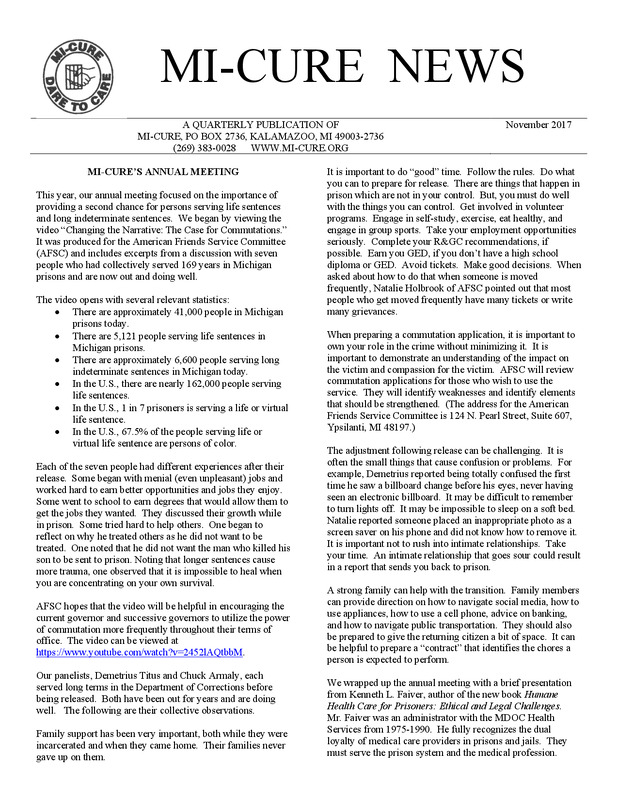
MI-CURE News (November 2017) covering calls for second chances for lifers and long-sentenced prisoners; guidance on preparing commutation applications and reentry challenges; discussion questions for candidates on criminal justice issues; court rulings reshaping sex offense laws and registries; proposals to reduce recidivism through licensing reform, scaled-back supervision, and financial support for returning citizens; Medicaid expansion's link to crime reduction; highlights of effective DUI and reentry programs; updates on MDOC's gender dysphoria policy; and the introduction of the federal Dignity for Incarcerated Women Act.
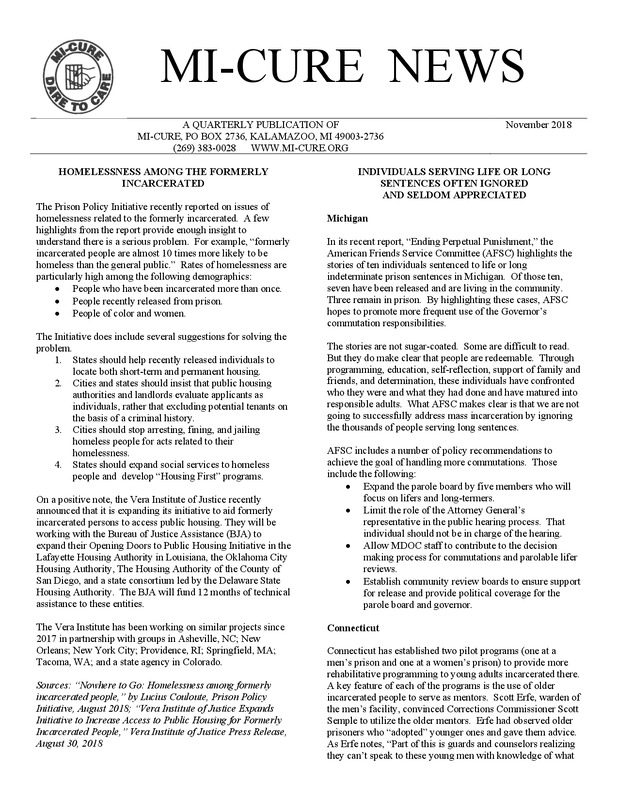
MI-CURE News (November 2018) covering homelessness among the formerly incarcerated and housing access reforms; the overlooked value of lifers and aging prisoners in rehabilitation; reductions in prison phone call costs; the decline of prison farming programs; a national push to reimagine prison with dignity-centered practices; ongoing issues access to legal resources; wrongful convictions and the limits of constitutional protections; persistent racial disparities in the justice system; and statewide updates on parole reform, occupational licensing, juvenile justice, and court-watching efforts.
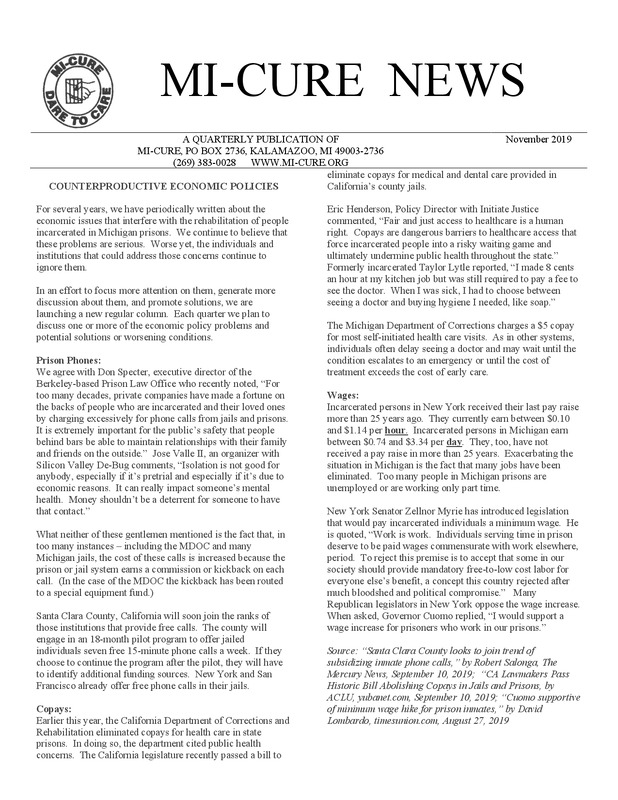
MI-CURE News (November 2019) covering economic barriers to rehabilitation—high phone costs, medical copays, and low wages; jails repurposed for housing and mental health care; innovative jail education programs; expanded financial aid for incarcerated Michiganders; reforms on solitary confinement, pregnant prisoners, and juvenile justice; gaps in mental health and addiction treatment; push for forensic science oversight; critiques of crime-focused media coverage; efforts to restore voting rights; and growing momentum to ban private prisons and reduce incarceration.
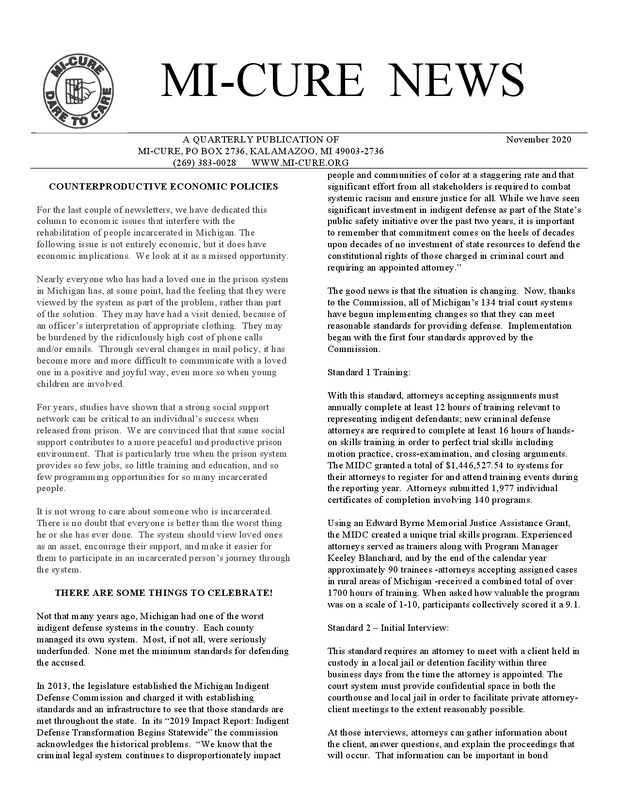
MI-CURE News (November 2020) covering barriers to family support in prison; statewide reforms in indigent defense; DNA evidence misconduct ; Black prosecutors call for justice transformation; widespread law enforcement misconduct in exoneration cases; major expungement and SNAP access reforms; proposed limits on solitary confinement; COVID-driven early releases; jail education programs; prison-based cat sanctuary; and Delaware’s elimination of solitary confinement.
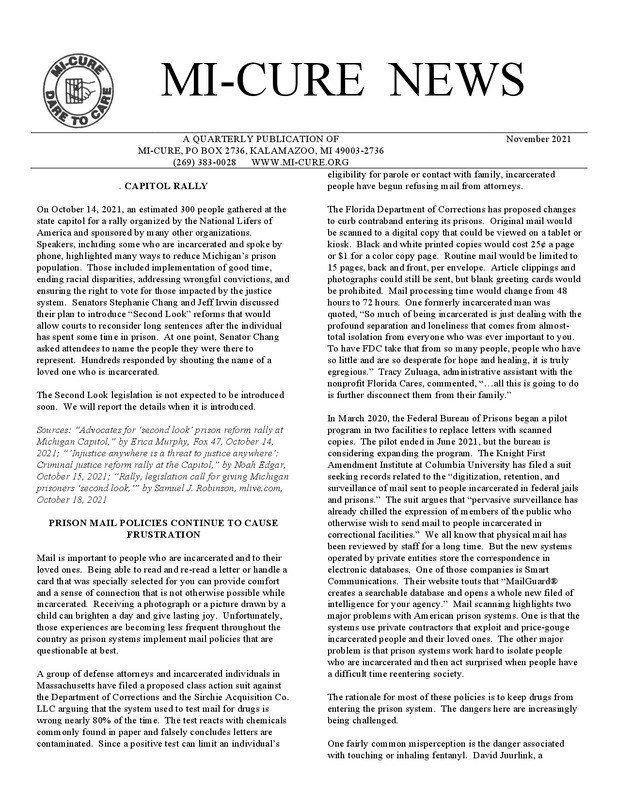
MI-CURE News (November 2021) covering Second Look sentencing and Good Time rally at the Capitol; growing concerns over restrictive prison mail policies and surveillance; barriers to medication-assisted opioid treatment in prisons; food reform; rising life sentences for women and racial disparities in incarceration; wrongful conviction reforms and jailhouse witness regulation; expansion of prison education programs nationwide; updates on Michigan’s sex offender registry law and tether advocacy; and policy changes on maternal health care, juror pay, prison healthcare contracts, electronic monitoring, and juvenile clemency.
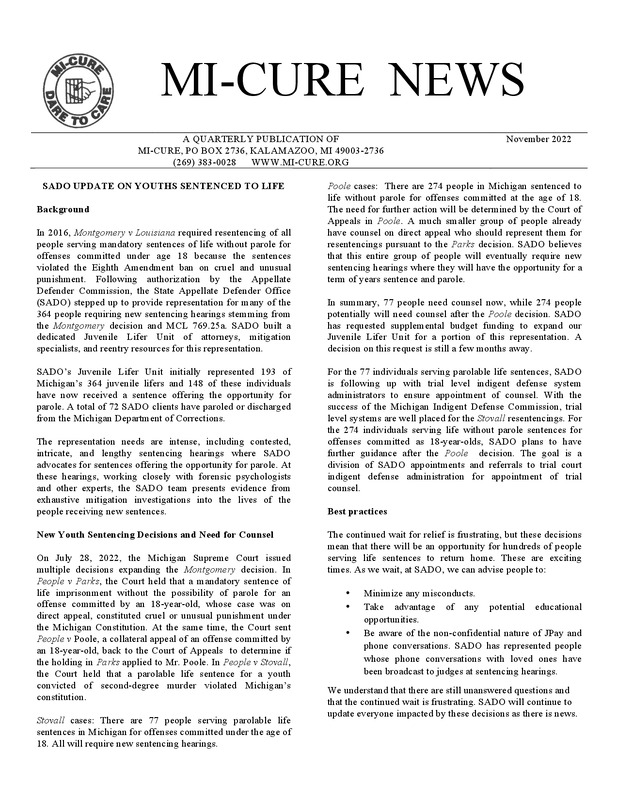
MI-CURE News (November 2022) covering juvenile lifer resentencing expansions; new prison programs in education, therapy, and rehabilitation; prison phone cost reductions and free call legislation; advocacy for visitation and solitary confinement reform; proposed federal prison oversight legislation; sex offender registry challenges; exploitative prison economies; ABA support for decarceration reforms.
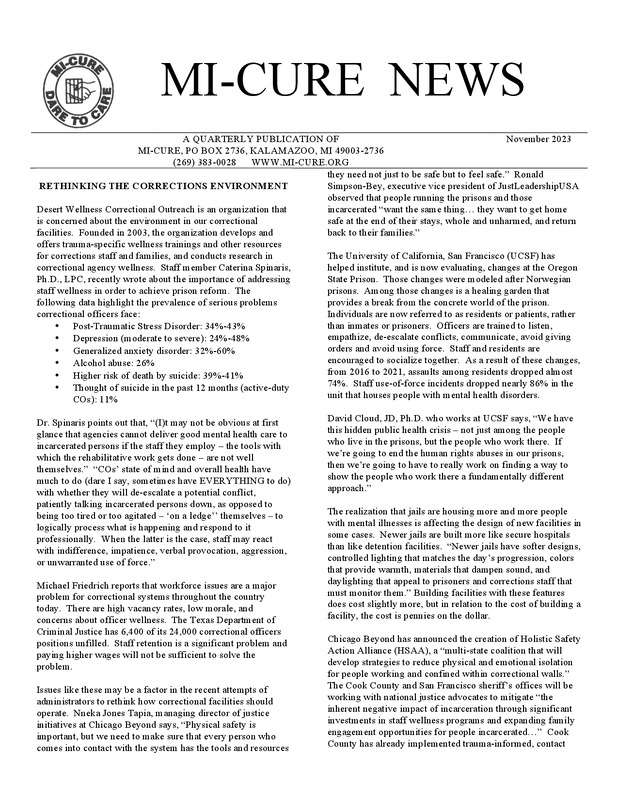
MI-CURE News (November 2023) covering the push for more humane, trauma-informed corrections through staff wellness, facility design, and holistic safety reforms; updates on sex offender registry litigation, tracking police misconduct, and public defense workloads; critiques of risk assessment tools and forensic science practices; Michigan legislation on housing, education access, juvenile justice, and medical parole; and national developments including prison phone cost elimination, commissary markup limits, parole reforms, prosecutorial accountability, and growing support to end juvenile life without parole.
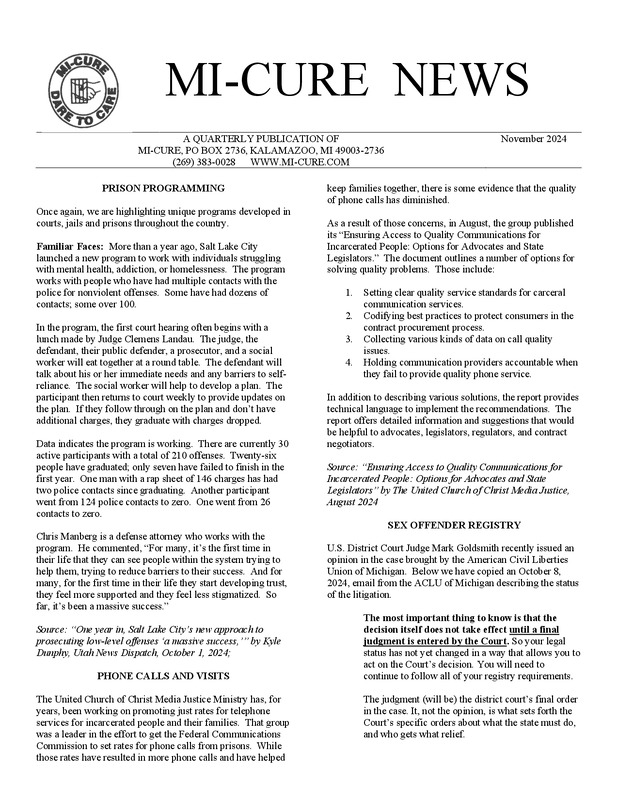
MI-CURE News (November 2024) covering innovative programming; advocacy for quality phone services in carceral settings; major court rulings on Michigan’s sex offender registry; national efforts to recognize and address brain injuries in justice-involved populations; failures in ending solitary confinement; reflections on mass incarceration’s roots and alternatives; widespread use and consequences of police deception in interrogations; collapsing private prison healthcare industry; growing concern over junk science in wrongful convictions; and shorts on new prison journalism initiatives, child-friendly visitation reforms in Vermont, and Maryland’s cancellation of parole supervision debts.
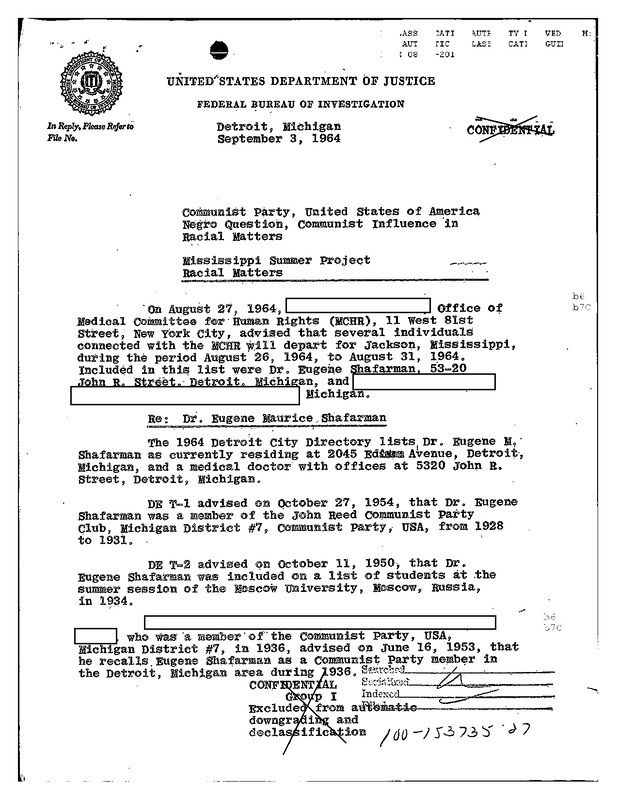
In depth profile and furnished informant details on individuals that participated, or were slated to participate, in the 1964 Mississippi Summer Project (Freedom Summer) and/or were alleged communists. Includes details about employment, travels, finances, as well as physical profiles of targeted individuals.
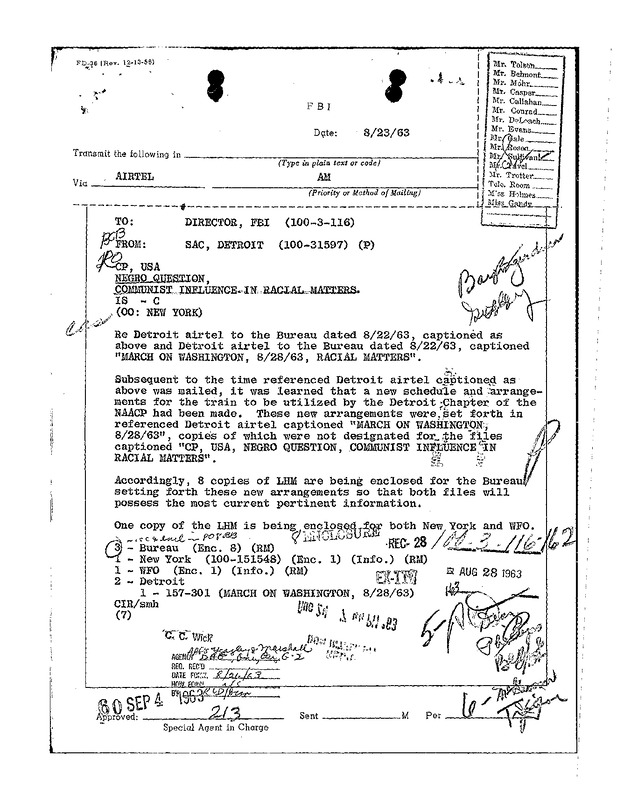
FBI gathered specific details regarding the train being serviced, departure & arrival dates, and the number of tickets purchased by the Detroit NAACP for locals to attend the March on Washington on August 28th, 1963.
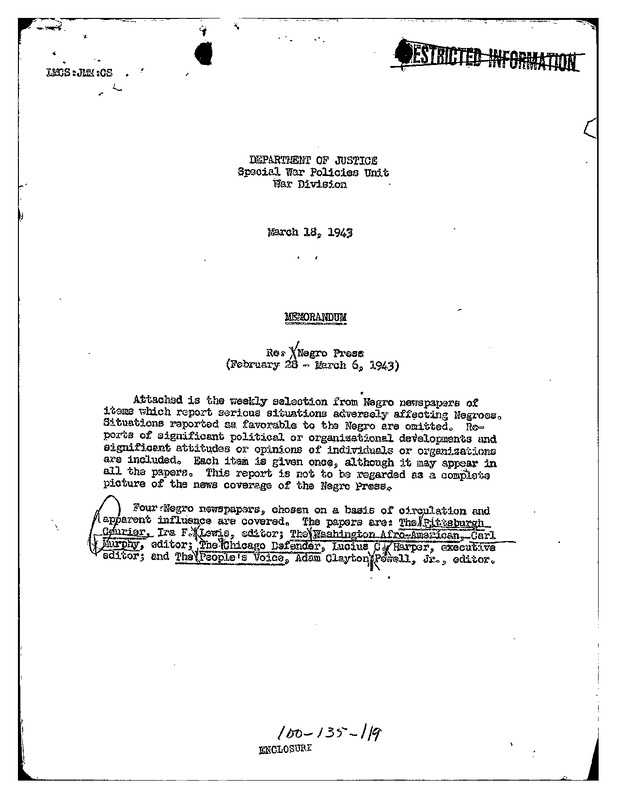
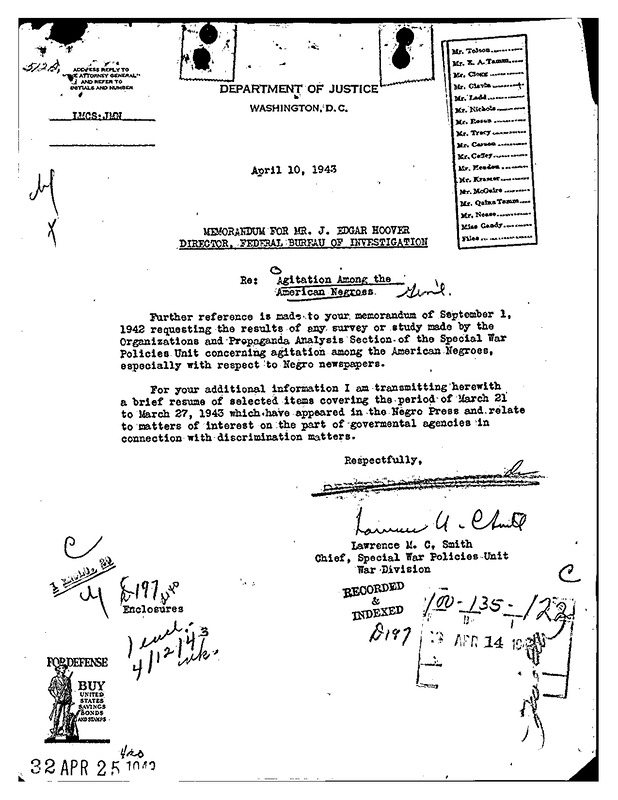
A memo containing a collection of quotes from Black publications from the week of February 28th, 1943. These memos were distributed internally and documented “serious situations adversely affecting Negroes” These memos were drafted to support the FBI’s Survey of Racial Conditions (RACON) regarding racial unrest and agitation. Pages and quotes included in this selection of pages highlight discrimination in the Armed Forces and employment. It is important to note, although this is listed alongside COINTELPRO files, this surveillance took place prior to formal initiation of COINTELPRO in 1956. The type of surveillance here is a precursor to the further expansion of mass surveillance activities throughout COINTELPRO.
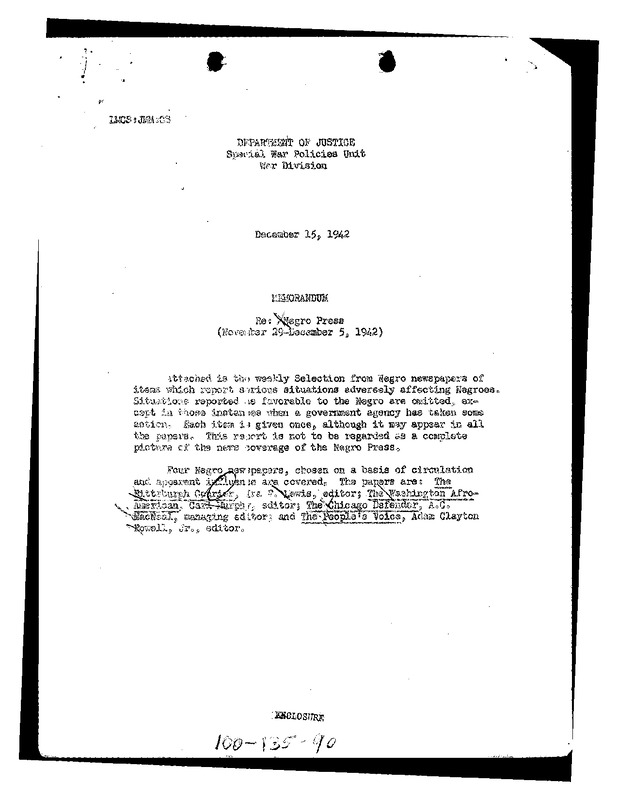
A memo containing a collection of quotes from Black publications from the week of November 29th, 1942. These memos were distributed internally and documented “serious situations adversely affecting Negroes” These memos were drafted to support the FBI’s Survey of Racial Conditions (RACON) regarding racial unrest and agitation. Pages and quotes included in this selection of pages highlight discrimination in the Armed Forces and employment. It is important to note, although this is listed alongside COINTELPRO files, this surveillance took place prior to formal initiation of COINTELPRO in 1956. The type of surveillance here is a precursor to the further expansion of mass surveillance activities throughout COINTELPRO.
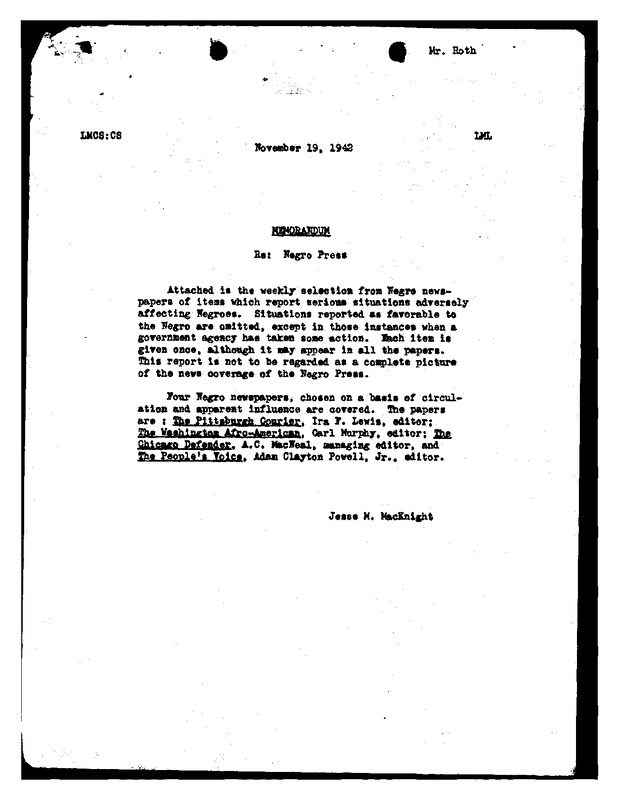
A memo containing a collection of quotes from Black publications from the week of November 8th, 1942. These memos were distributed internally and documented “serious situations adversely affecting Negroes” These memos were drafted to support the FBI’s Survey of Racial Conditions (RACON) regarding racial unrest and agitation. It is important to note, although this is listed alongside COINTELPRO files, this surveillance took place prior to formal initiation of COINTELPRO in 1956. The type of surveillance here is a precursor to the further expansion of mass surveillance activities throughout COINTELPRO.
A memo containing a collection of quotes from Black publications from the week of February 28th, 1943. These memos were distributed internally and documented “serious situations adversely affecting Negroes” These memos were drafted to support the FBI’s Survey of Racial Conditions (RACON) regarding racial unrest and agitation. Pages and quotes included in this selection of pages highlight discrimination in the Armed Forces and employment. It is important to note, although this is listed alongside COINTELPRO files, this surveillance took place prior to formal initiation of COINTELPRO in 1956. The type of surveillance here is a precursor to the further expansion of mass surveillance activities throughout COINTELPRO.
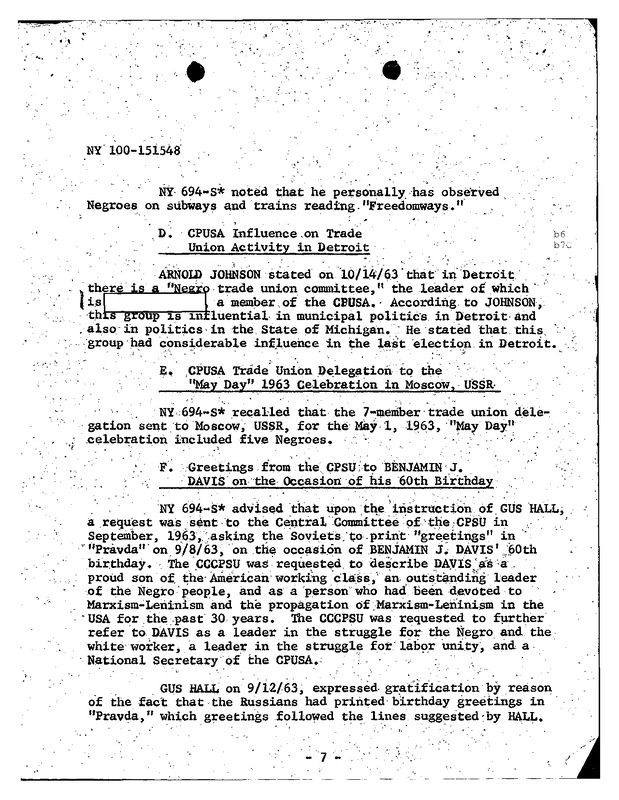
This document briefly discusses Arnold Johnson’s remarks on the influential Negro Trade Union Committee in Detroit politics. It also notes that the CPUSA contacted the Soviet CPSU to have Pravda publicize Benjamin J. Davis’s birthday and recognize his leadership in labor unity and Black struggles.