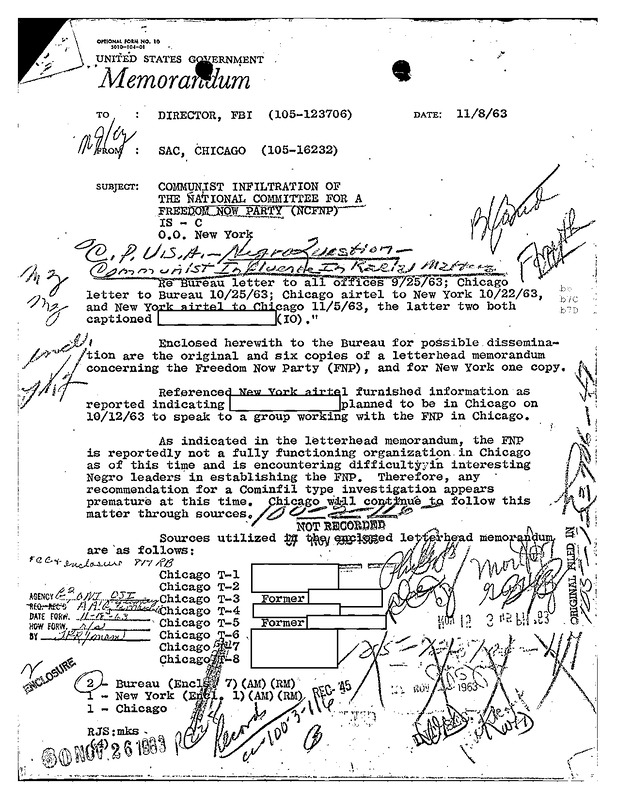
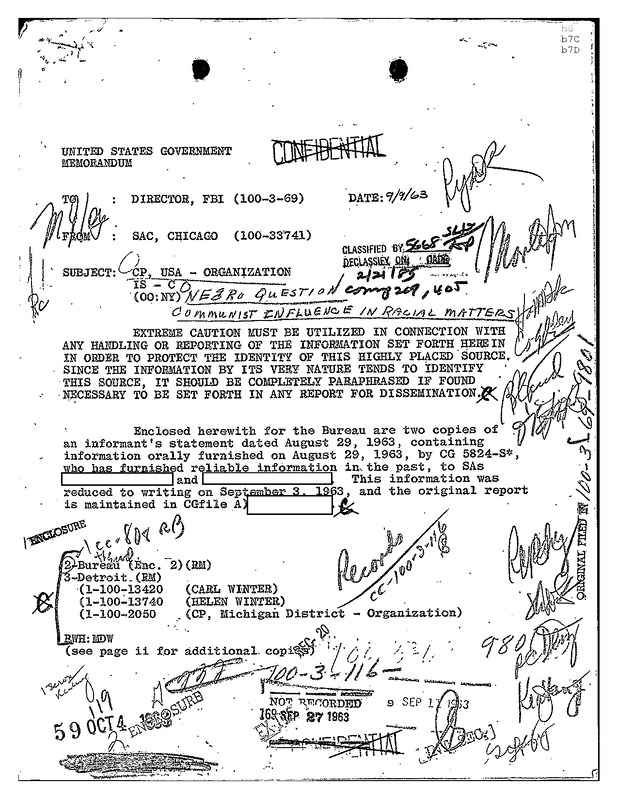
This document examines the Freedom Now Party’s budding presence in Chicago during the fall of 1963, relying on multiple informants to gather intelligence about its formation and Black community mobilization. Informants provided details from private conversations and meetings, including the role of an unidentified source in these activities.
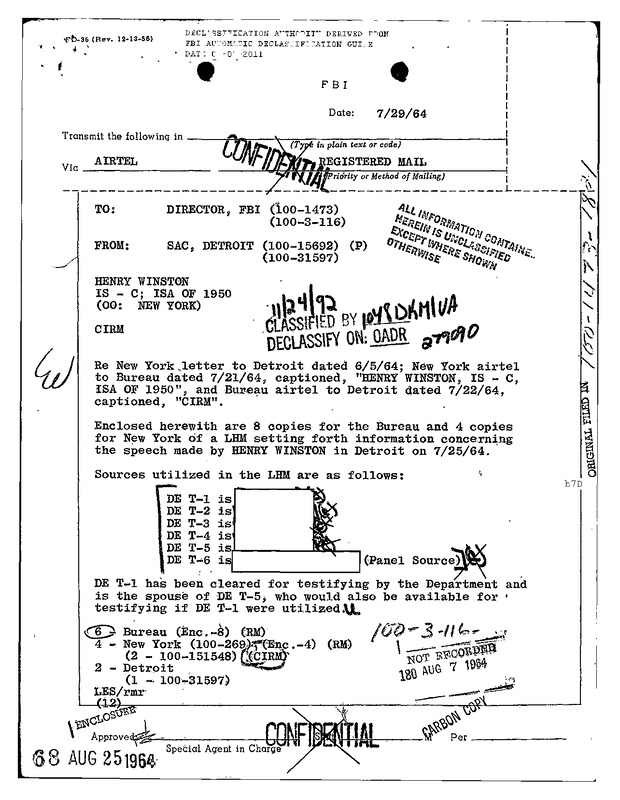
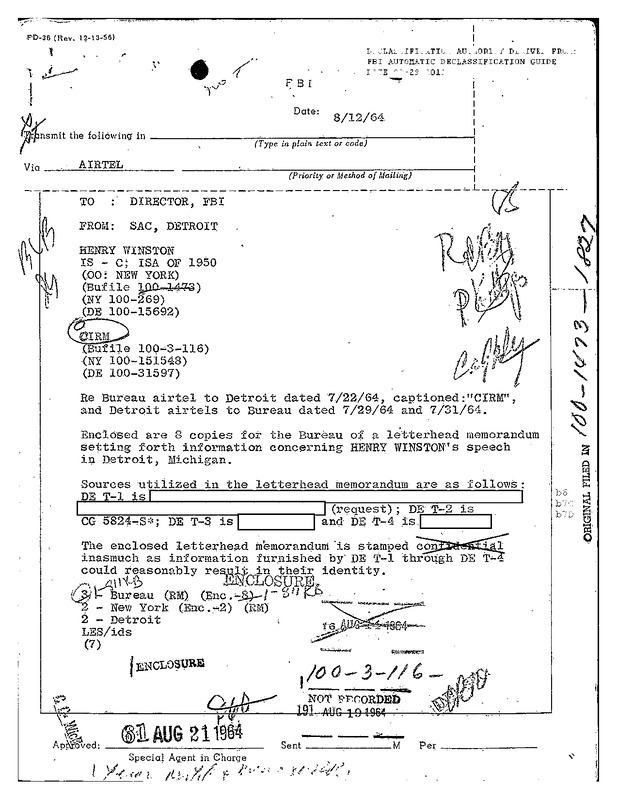
This document details the use of informants to monitor Henry Winston’s activities in Detroit, including his speech addressing civil rights, racial violence, the presidential election, and socialism. Document also includes articles from local newspapers that further detailed Winston’s visit on July 25th, 1964.
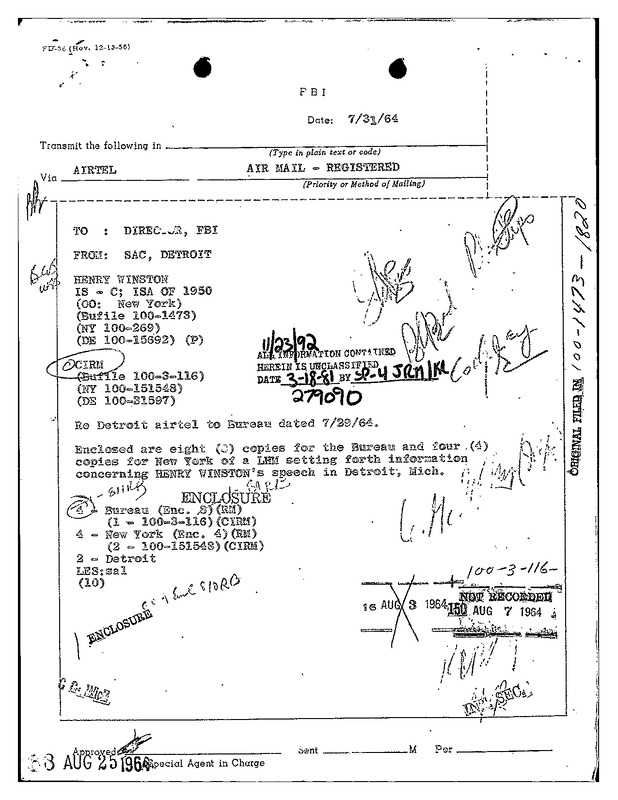
This document details Henry Winston’s speech in Detroit on July 25th, 1964. His speech addressed civil rights, racial violence, the presidential election, and socialism. Document includes excerpts from the newspaper East Side Shopper.
This document details Henry Winston’s speech in Detroit on July 25th, 1964. His speech addressed civil rights, racial violence, the presidential election, and socialism. Information regarding the contents of Winston’s speech was furnished by informants that had infiltrated the CPUSA.
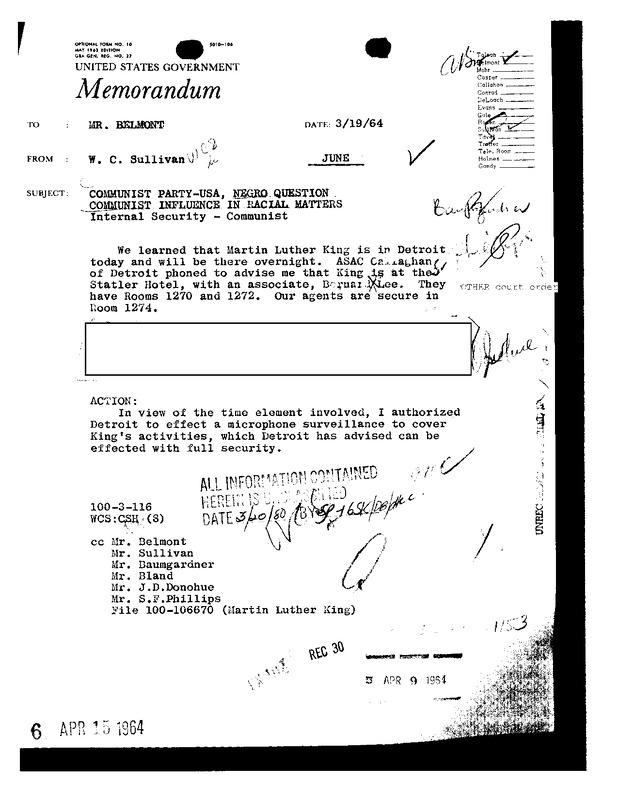
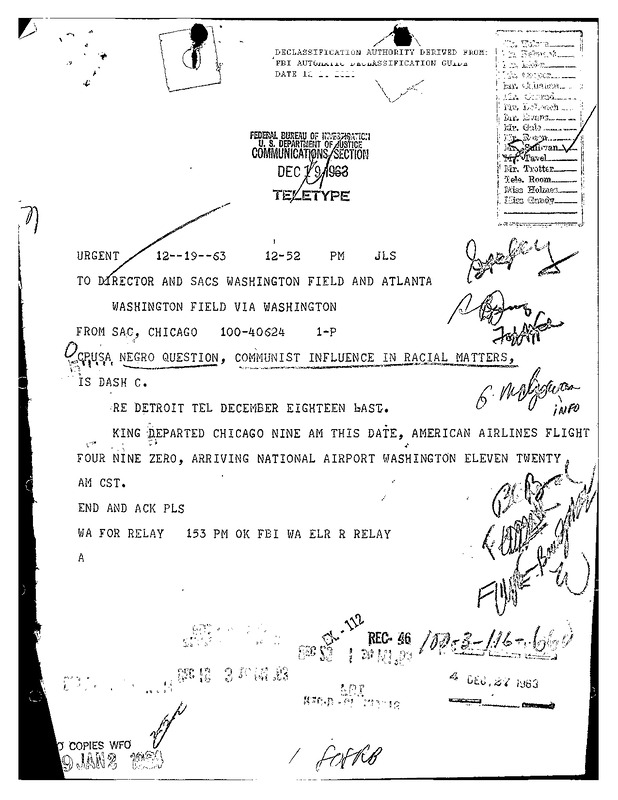
FBI investigation of a tip that Martin Luther King will be staying at the Statler Hotel for a night. Attached is an additional action item outlining authorization for microphone surveillance.
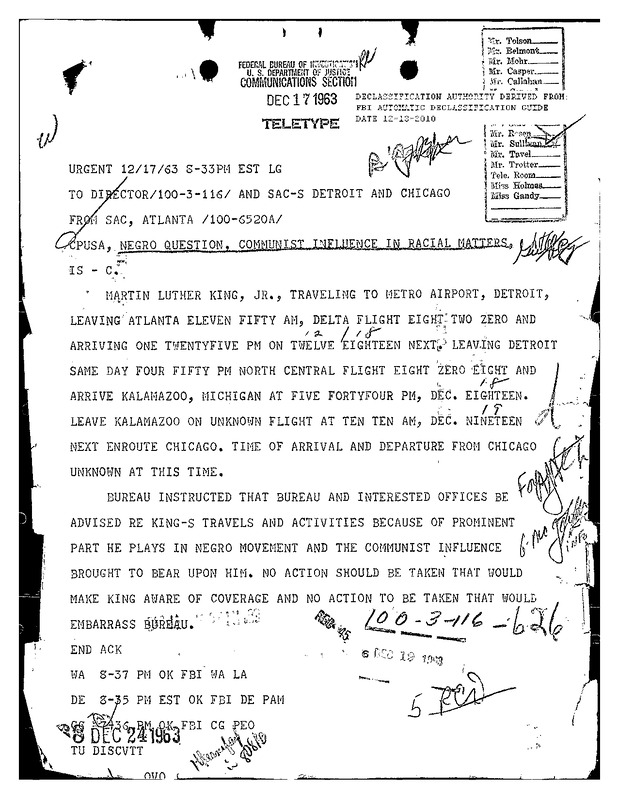
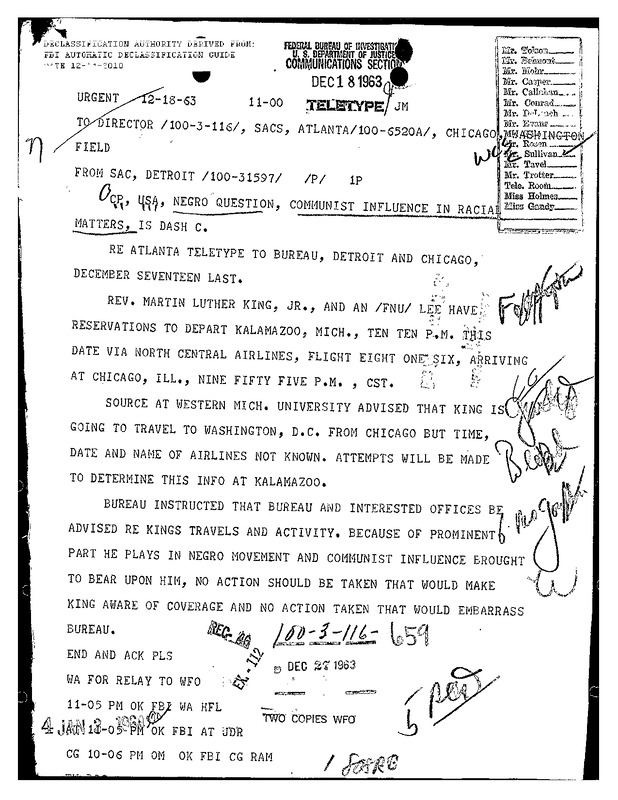
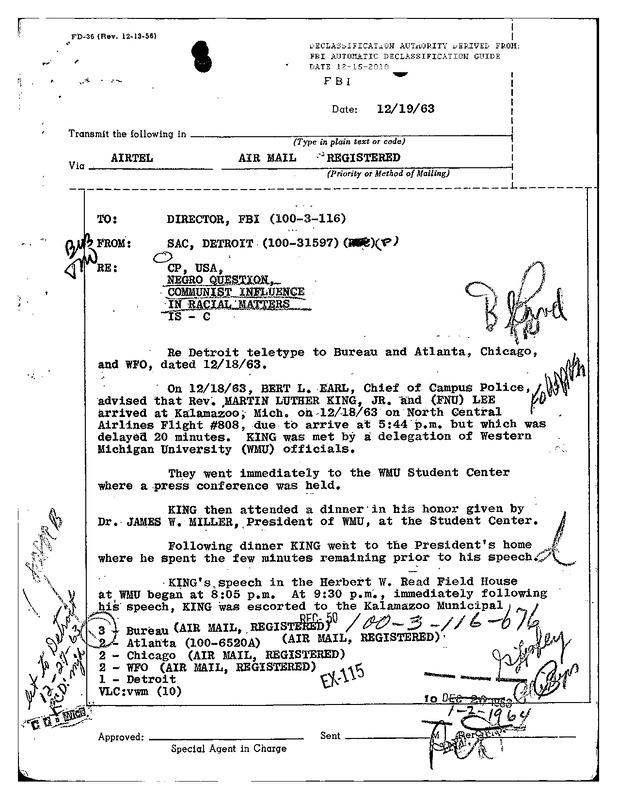
FBI investigation of Lead on MLK's whereabouts, focusing on a dinner in his honor at Western Michigan University (WMU) and his airline flights to and from Michigan.
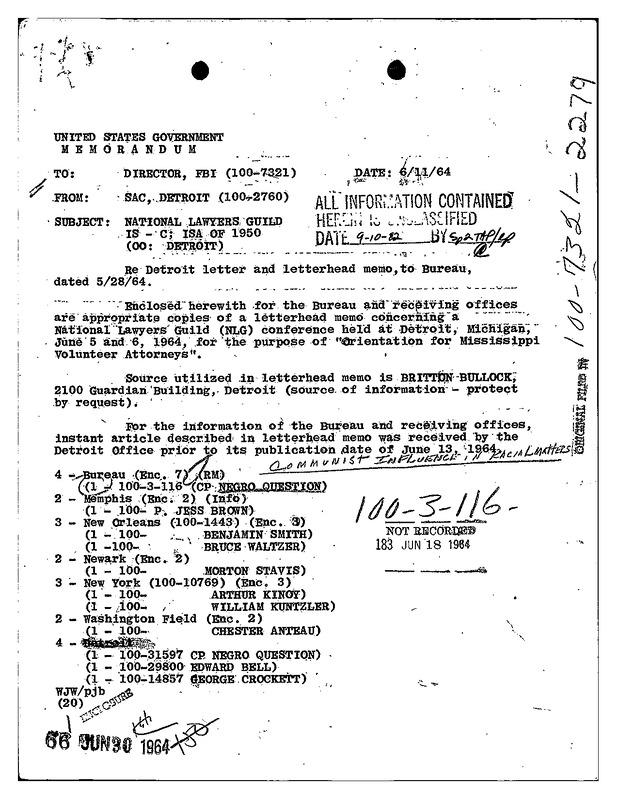
Information furnished by an informant detailing the National Lawyers Guild’s involvement in Mississippi to assist with legal representation of Black Americans, and other demonstrators, during Civil Rights protests and actions. Also contains an article from the Michigan Chronicle which details a national conference that took place in Detroit, which focused on how lawyers could further assist demonstrators in the South.
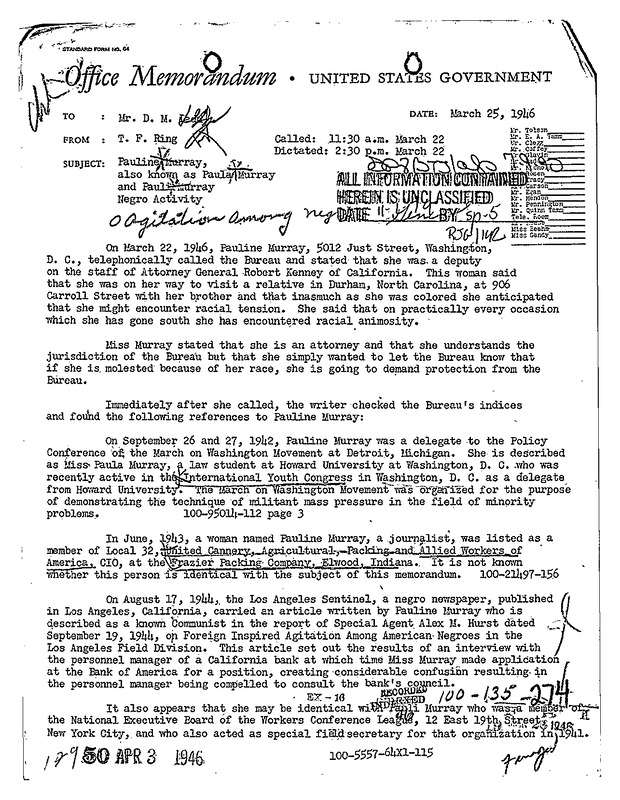
This is a brief memo regarding surveillance of Pauli Murray. Murray contacted the FBI about possible protection on her return trips home to North Carolina, as she always encountered “racial animosity” and was worried about experiencing violence. The Bureau then pulled her file to see what indices they already had on the Murray. The memo details previous surveillance on her and her activism.
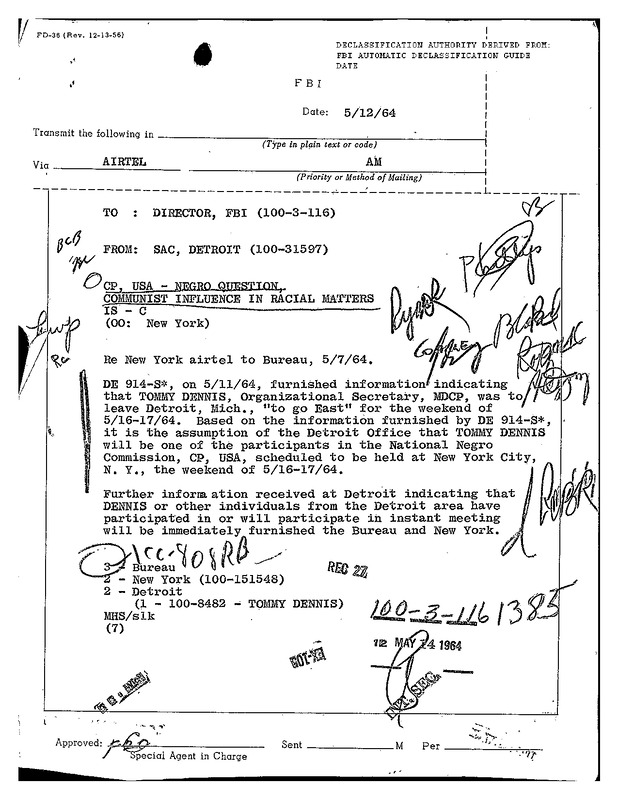
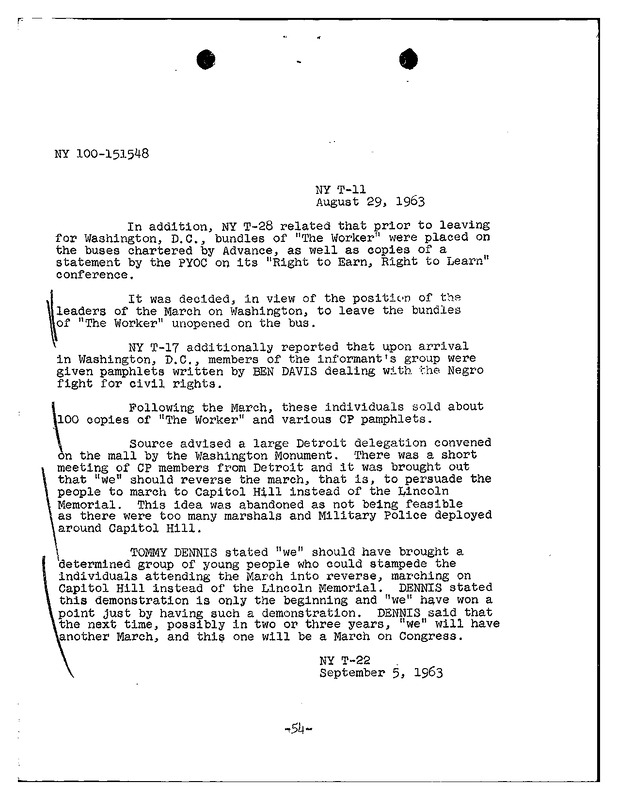
Investigative report on information furnished by an informant detailing the plans of a Tommy Dennis, and other groups within the Detroit area, to attend the National Negro Commission in New York City.
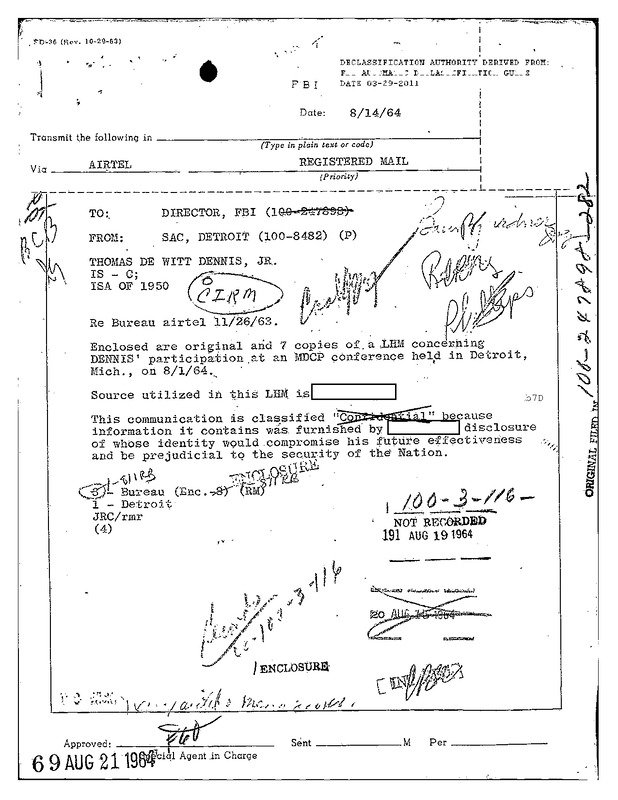
This document covers informant surveillance of Tommy Dennis, organizational secretary of the Michigan District Communist Party, during a conference on August 1, 1964. It details Dennis’s speech on the Civil Rights Movement and the CPUSA’s efforts to restore its influence, as well as conference proposals on organizing a Civil Rights Conference, training political candidates on CPUSA positions, and recruitment strategies.
This document covers informant surveillance of Tommy Dennis, organizational secretary of the Michigan District Communist Party, during a conference on August 1, 1964. It details Dennis’s speech on the Civil Rights Movement and the CPUSA’s efforts to restore its influence, as well as conference proposals on organizing a Civil Rights Conference, training political candidates on CPUSA positions, and recruitment strategies.
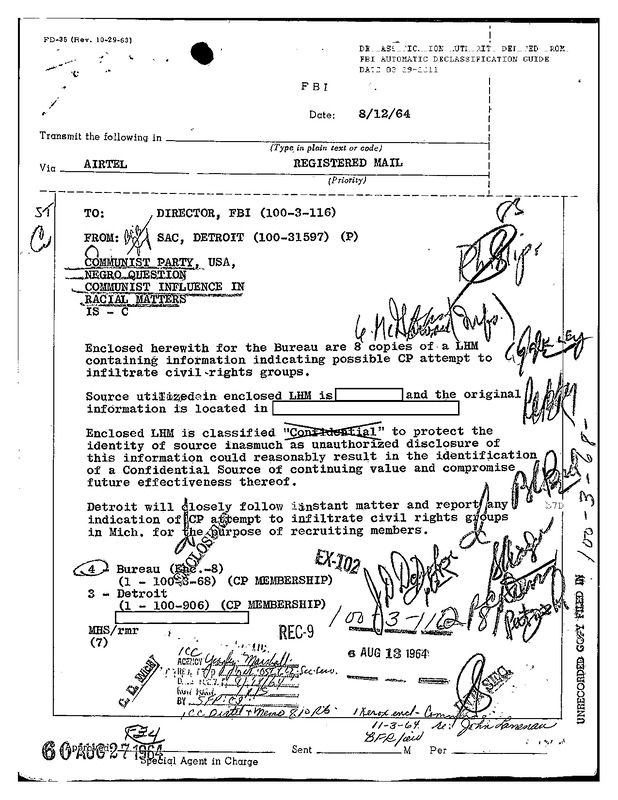
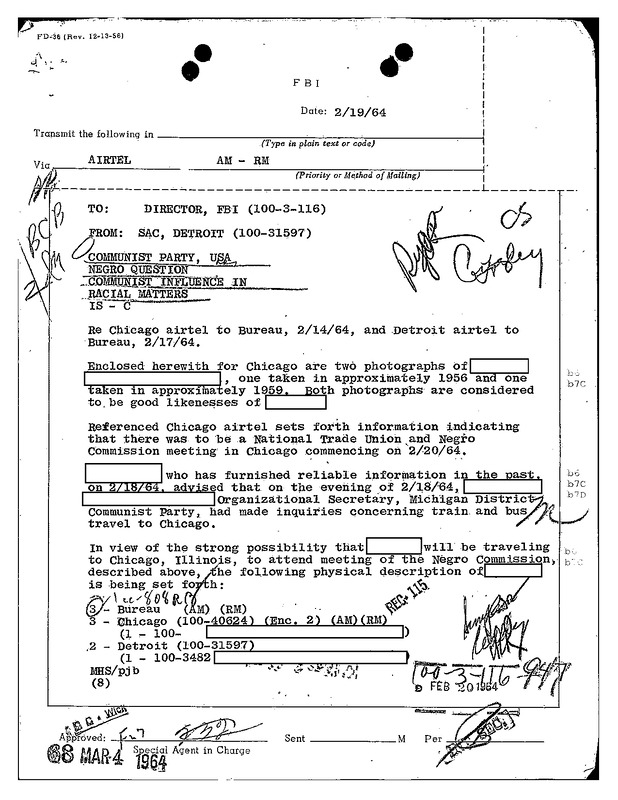
This document is information regarding an undisclosed target from Detroit, who was a member of the Michigan Communist Party, attempting travel to Chicago to attend a National Trade Union and Negro Commission meeting.
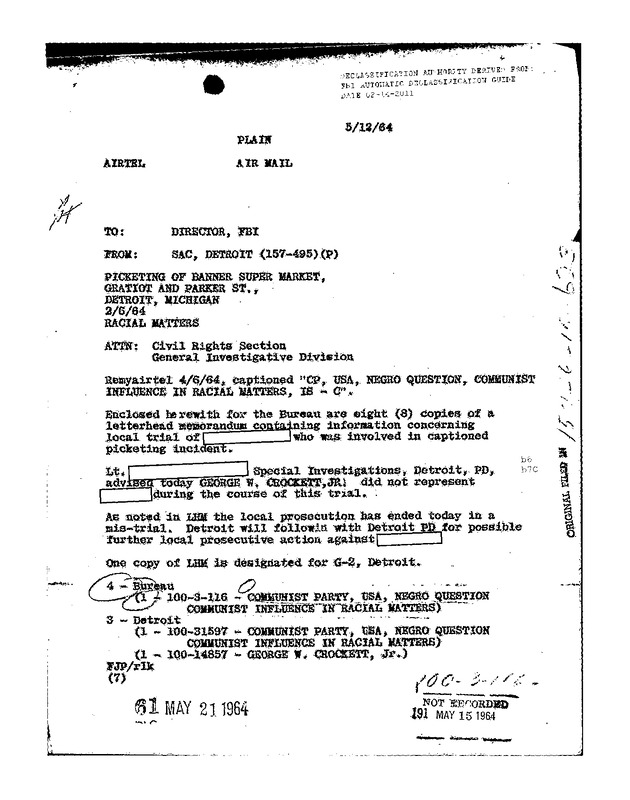
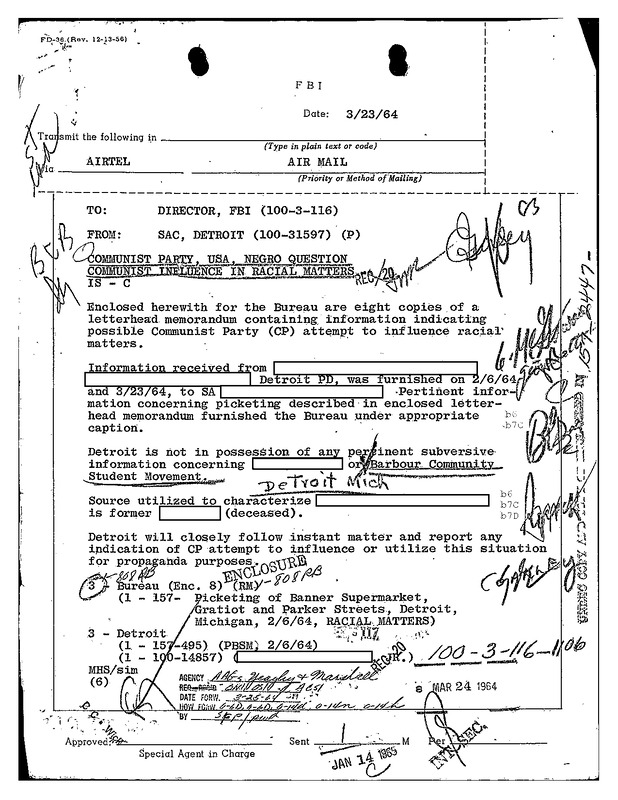
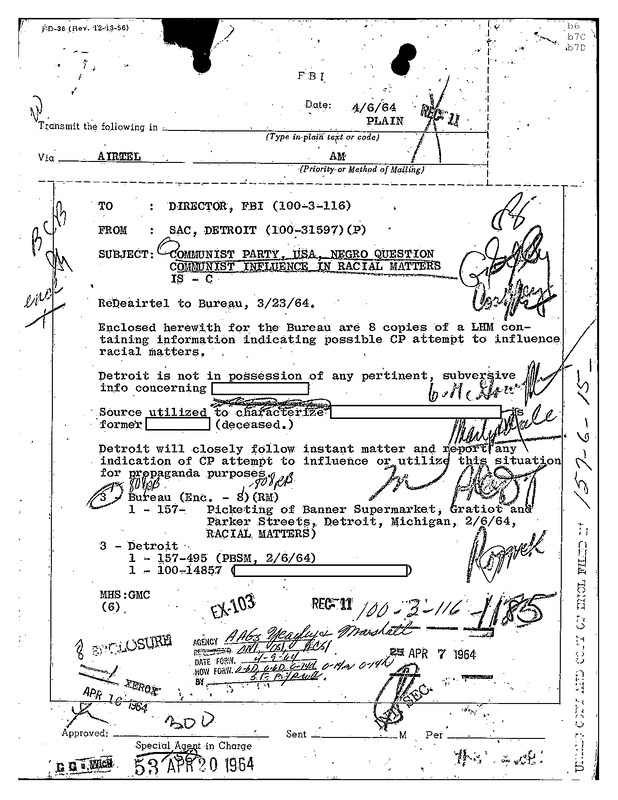
Document contains information on a picketing demonstration that occurred outside of the Banner Supermarket in Detroit on February 6th, 1964. This demonstration was led by youth and staged by the NAACP and the Barbour Community Student Movement (Barbour Junior High School) to protest discrimination. One of the undisclosed subjects of the surveillance had supposed ties to the Communist Party.
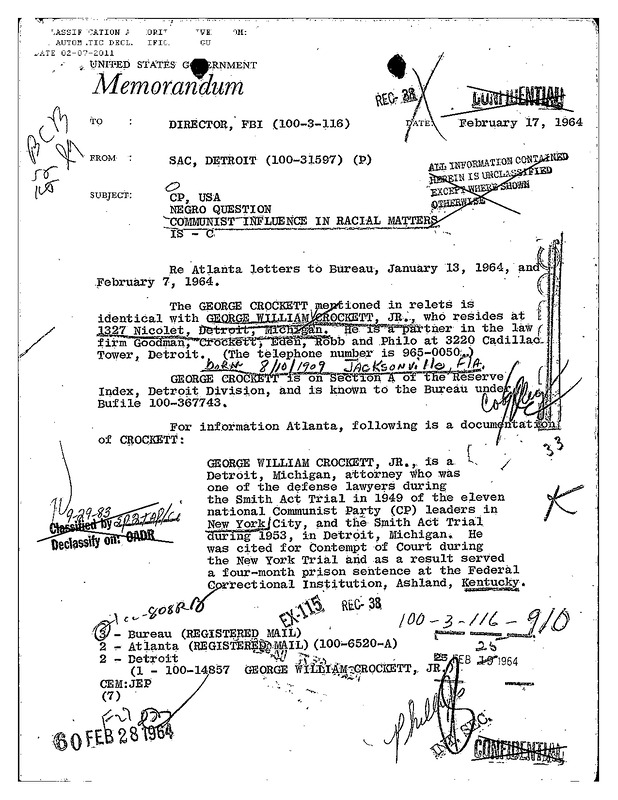
This document is a detailed profile of George W. Crockett which includes his physical appearance, family history, marital status, occupation, and history counseling Communist party members. Details were furnished by the Atlanta FBI Field Office and the U.S. Department of State Passport Office.
This document highlights the use of a highly protected informant reporting on a conversation between CPUSA leaders Gus Hall and Hyman Lumer in New York City. The discussion covered key topics related to the Civil Rights Movement and the CPUSA, including the perspectives of Black members, the March on Washington, and membership trends in California.
This excerpt from an FBI report investigates the rise of "Anti-American" ideologies among Black Americans and their solidarity with other oppressed groups globally, especially in Japan. This excerpt in particular focuses on Detroit. It compiles information on prominent Black and communist leaders, employment organizations, school and housing issues, and racial tensions. While some pages are illegible, the document provides insight into local conditions and attitudes before the launch of COINTELPRO, serving as foundational groundwork for later surveillance initiatives.
61-pages from the FBI’s Survey of Racial Conditions in the United States, a collection of 1940s surveillance findings from the FBI’s 56 Field Offices, highlighting the sentiments of the Black community and Black organizations, particularly as it pertains to the nation’s war efforts and towards the U.S. The selected 61-pages pertain to Detroit and the Detroit FBI Field Offices surveillance. Surveillance targets include several suspected communists, communist front organizations, and publications. While the study was purportedly not meant to give rise to “interference” or label the Black community as “subversive”, this type of surveillance laid the groundwork for future surveillance and destabilization that occurred during COINTELPRO. Same scan as FBI_100.
This section of the RACON report examines the impact of Japanese influence on Black Americans, the "Pacific Movement" across the Eastern world, the Peace Movement in Ethiopia, and organizations such as the Ethiopian Pacific Movement, Moorish Science Temple, and African Moslem Welfare Society. It highlights the connections between international movements and Black American groups in the United States.
22-pages from the FBI’s Survey of Racial Conditions in the United States, a collection of 1940s surveillance findings from the FBI’s 56 Field Offices, highlighting the sentiments of the Black community and Black organizations, particularly as it pertains to the nation’s war efforts and towards the U.S. The selected 22-pages pertain to Detroit and the Detroit FBI Field Offices surveillance. Surveillance targets highlighted include Black press and publications, such as the Michigan Chronicle, as well as emerging Japanese & Black coalitions, such as The Development of Our Own. While the study was purportedly not meant to give rise to “interference” or label the Black community as “subversive”, this type of surveillance laid the groundwork for future surveillance and destabilization that occurred during COINTELPRO. Similar scans to FBI_101, but has the inclusion of sections on the Negro Press.
This document is a follow-up on the Banner Supermarket protest by Barbour Junior High students, identifying teacher Barry Kalish as a key figure. The Detroit News reported Kalish was on trial for allegedly “brainwashing” students into protesting, with his defense led by George Crockett, another subject of FBI surveillance.