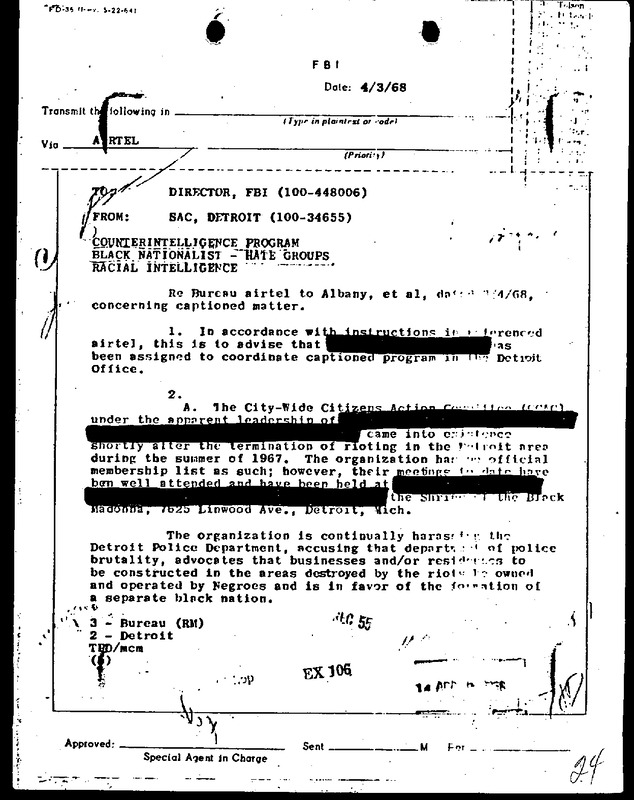
Racial Intelligence analysis of radical black nationalist groups in Detroit following the summer of 1967, such as the City-Wide Citizens action Committee (CCAC) and the Malcolm X. Society. All in regards to activism against police brutality, meeting attendance, purchases of firearms, and meeting dialogue of "establishing a separate black nation".
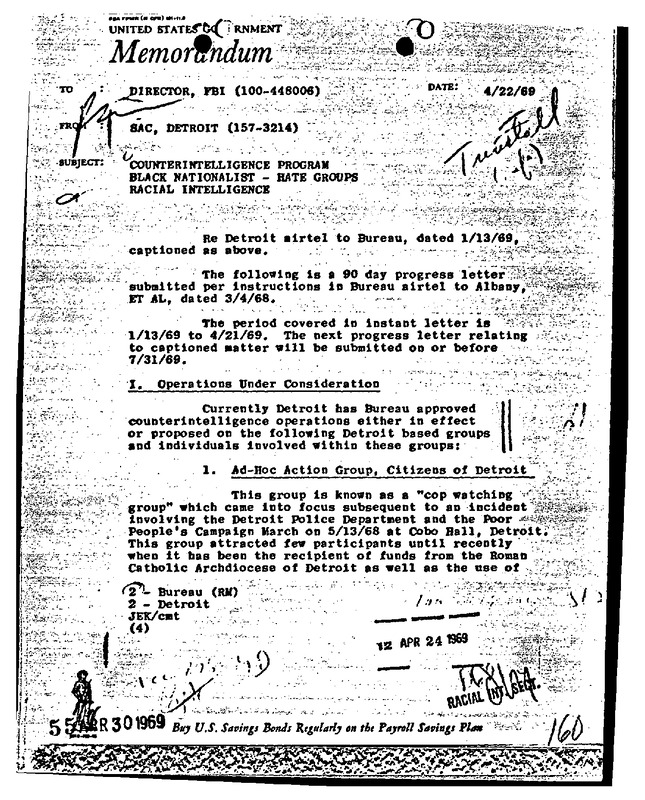
90-day progress report submitted to FBI Headquarters highlighting black nationalist groups, surveillance operations under consideration, ongoing operations, and the comprehensive tangible results produced.
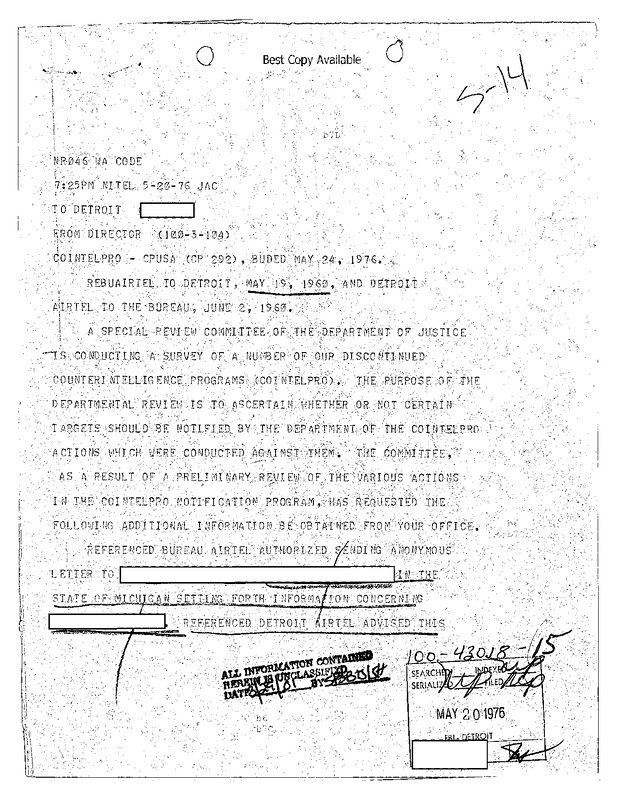
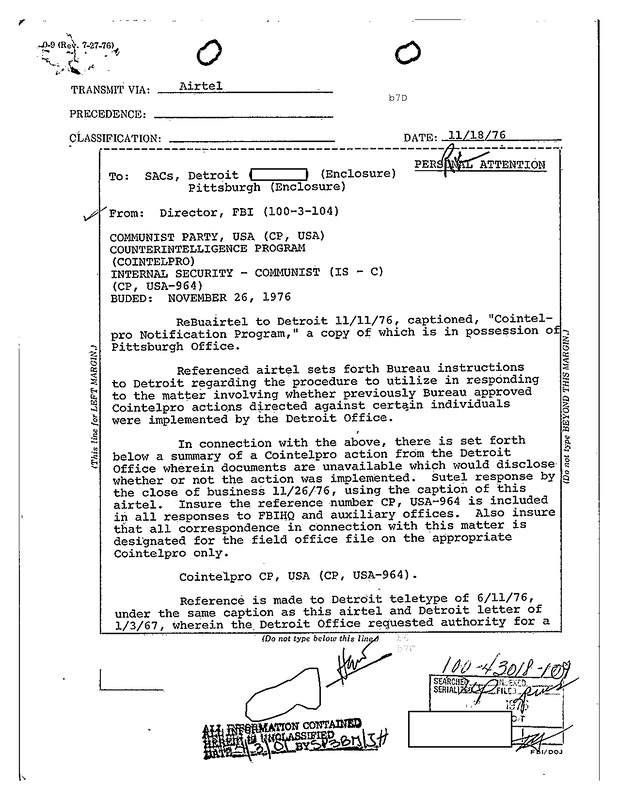
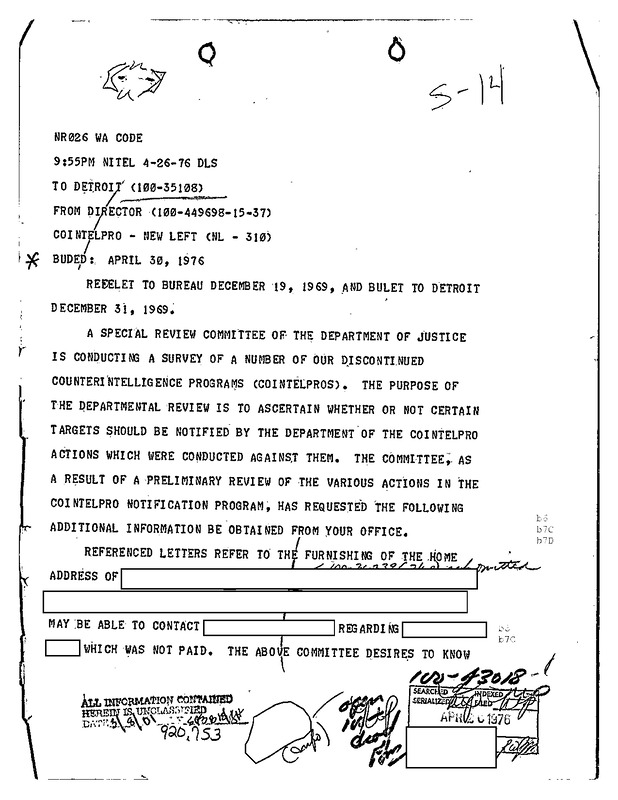
Hundreds of documents detailing counterintelligence methods used during COINTELPRO (1956–1971), with a focus on the Communist Party of the United States of America (CPUSA). Most are communications between the Detroit FBI Field Office and FBI Headquarters from May 1976- September 1977, when the DOJ conducted an internal review to determine “…whether or not certain targets should be notified by the department of the COINTELPRO actions which were conducted against them.” Tactics detailed include propaganda, smear campaigns, manipulation, and other efforts to infiltrate and destabilize the CPUSA and other leftist organizations. Several requested relevant documents are listed as "missing."
This document details a wide range of FBI counterintelligence tactics used against “New Left” activists in the Detroit metro, Ann Arbor, and at the University of Michigan. It describes efforts to disrupt groups like the Students for a Democratic Society (SDS), the White and Black Panther Parties, and the “Weather Underground”, among others, through anonymous letters, surveillance, and the exploitation of internal disputes and racial tensions. The document also outlines the Bureau’s coordination with local institutions, targeting of faculty and attorneys, and the use of fabricated information to intimidate or discredit individuals. These activities illustrate the extent and systematic nature of FBI operations against campus activism as revealed in this 184-page report.
206-page document outlining sustained counterintelligence efforts targeting New Left activists and organizations, particularly those associated with the Communist Party in the Detroit Metro. It details covert tactics such as sending fictitious anti-Communist letters to the media and employers, aimed at discrediting or costing individuals their jobs, as well as disrupting anti-war demonstrations and meetings. The document highlights operations against figures like Ernest Goodman, Claude Lightfoot, Judge George Crockett, and Reverend Albert Cleage, and records ongoing evaluations of past counterintelligence actions in the wake of COINTELPRO’s exposure. It also reveals internal discussions about the risks and ethical concerns of harassment, coordination with other FBI divisions, and attempts to sow distrust within targeted organizations. Documents are from November 1975 to September 1977, when the FBI began reviewing counterintelligence that took place between 1961 to 1969.
This 293-page FBI document primarily consists of internal communications following the exposure of COINTELPRO in the 1970s, as the Detroit Field Office and FBI headquarters attempted to locate files related to their counterintelligence operations against the New Left and Communist Party. Although the document lists names of targets and actions taken, it notes that most detailed records are either missing or unaccounted for. The correspondence reveals the Bureau’s efforts to reconstruct its past activities, contact affected individuals, and the widespread absence of critical documentation regarding this long standing operation.
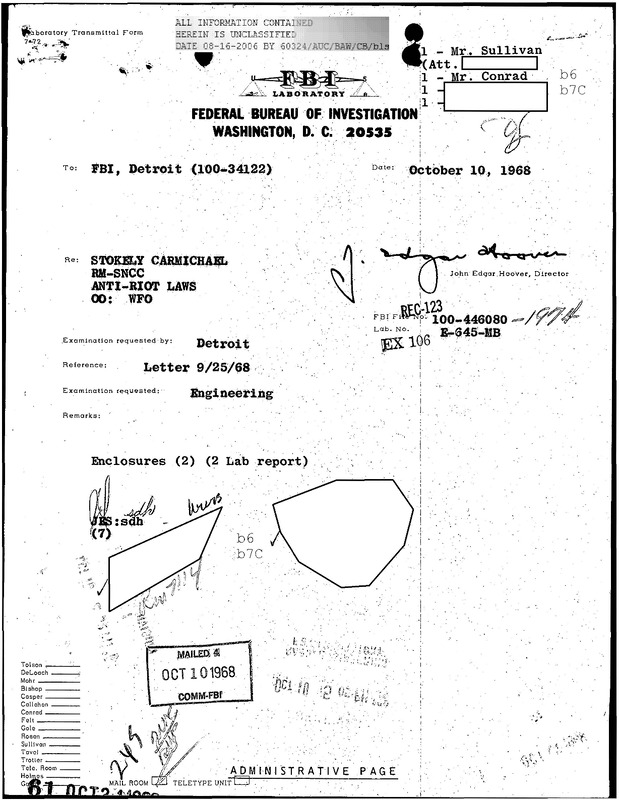
This document details the FBI’s attempt to identify additional attendees of Stokely Carmichael’s speech at the University of Michigan on August 22, 1968. Although an audio recording was made, tape distortions prevented full transcription, prompting the FBI director to request further field reports to reconstruct Carmel’s remarks. The tape’s contents are referenced but not included.
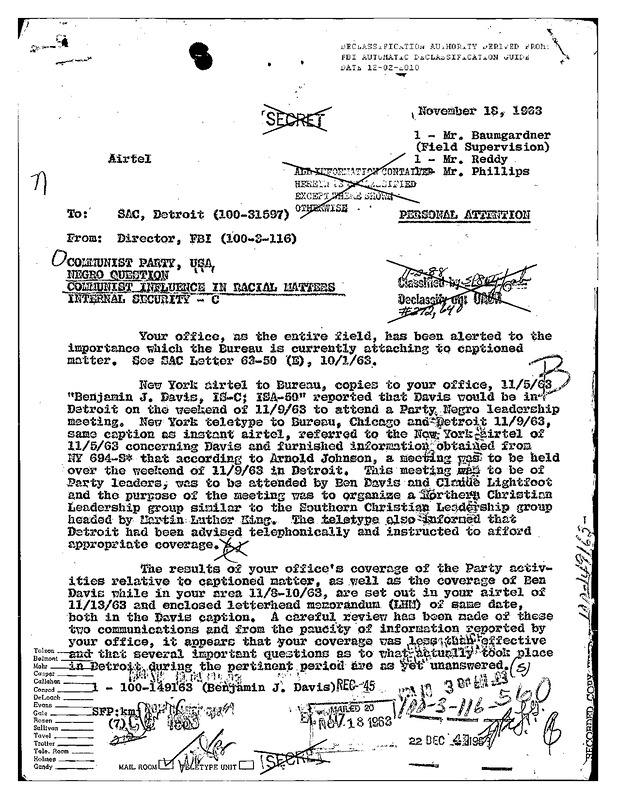
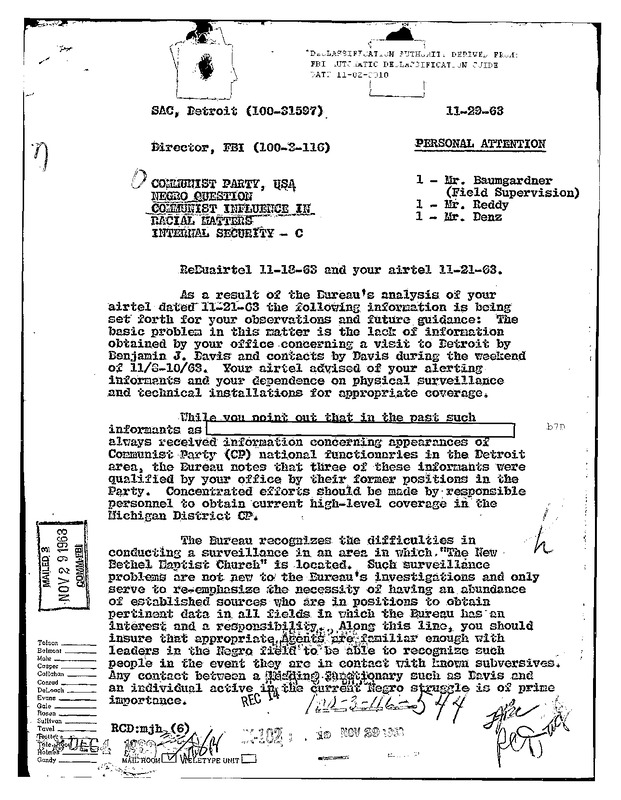
This memo from FBI headquarters sharply critiques the Detroit Field Office’s inadequate surveillance during Benjamin J. Davis’s November 8 –10, 1963 visit, despite significant resources assigned. The director requests a detailed explanation of planning procedures and operations within the Field Office to prevent future lapses in coverage.
Memo from FBI headquarters criticizes the Detroit Field Office for insufficient surveillance of prominent communist and Black civil rights leaders during Benjamin J. Davis’s visit on November 8–10, 1963. The headquarters emphasizes the need for better coverage, citing concerns over the Communist Party’s interest in influencing the sensitive Civil Rights Movement and advancing its agenda.
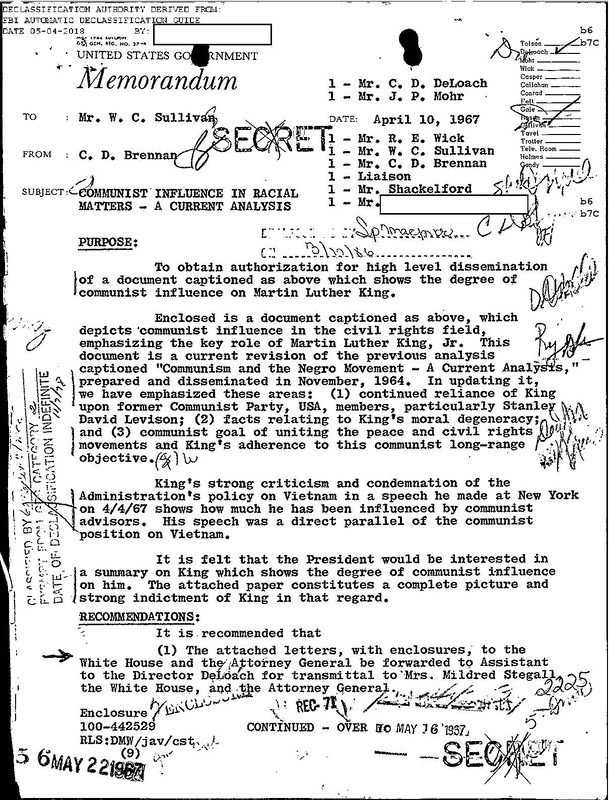
This report scrutinizes Martin Luther King Jr.’s supposed connections to communism, primarily because of his opposition to the Vietnam War. The FBI expresses concerns that these alleged ties endanger both the status quo of the civil rights movement and the nation. The document details King's relationships with known communist figures such as Hunter O'Dell, Bayard Rustin, and Stanley David Levison, and examines his personal conduct, including extramarital affairs, as part of their campaign. Informant-sourced data is included, and the FBI concludes that King’s motivations are politically influenced, not religiously or morally driven, characterizing him as a national risk.
36-page excerpt from a 200-page FBI report examines Communist Party activities in the United States, including strategies, tactics, and influence within racial organizations. The report covers several individuals under FBI surveillance associated with the CPUSA and the civil rights movement, such as MLK, Benjamin J. Davis, and Claude Lightfoot, among many others.
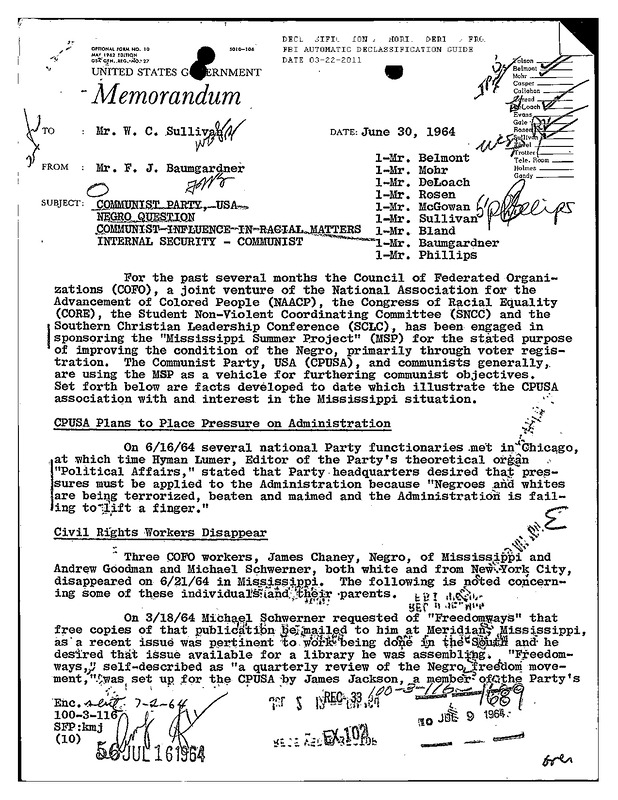
FBI report examining the Communist Party USA’s potential involvement in the Mississippi Summer Project (Freedom Summer), documenting surveillance of key CPUSA and Civil Rights leaders, participants from various cities, and ordinary citizens. The report concludes with calls for the Bureau to broadly monitor individuals planning to participate in the Freedom Summer. This report was to be forwarded to Walter W. Jenkins, Special Assistant to the U.S. President.
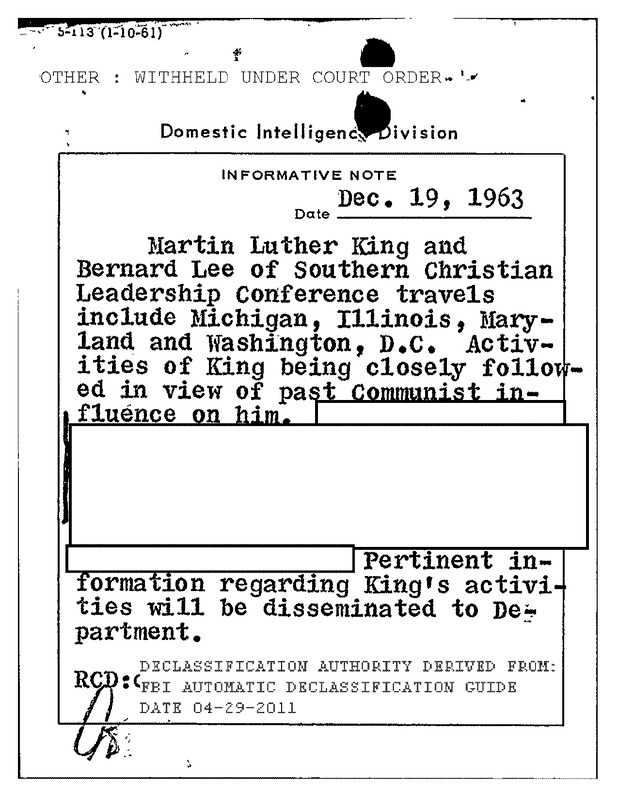
This document contains flight logs and travel details of Martin Luther King Jr. and his associates as they travel to Michigan, Illinois, Maryland, and Washington, D.C. Monitoring occurred due to MLK’s prominence in the Civil Rights Movement and suspected connections to communism.
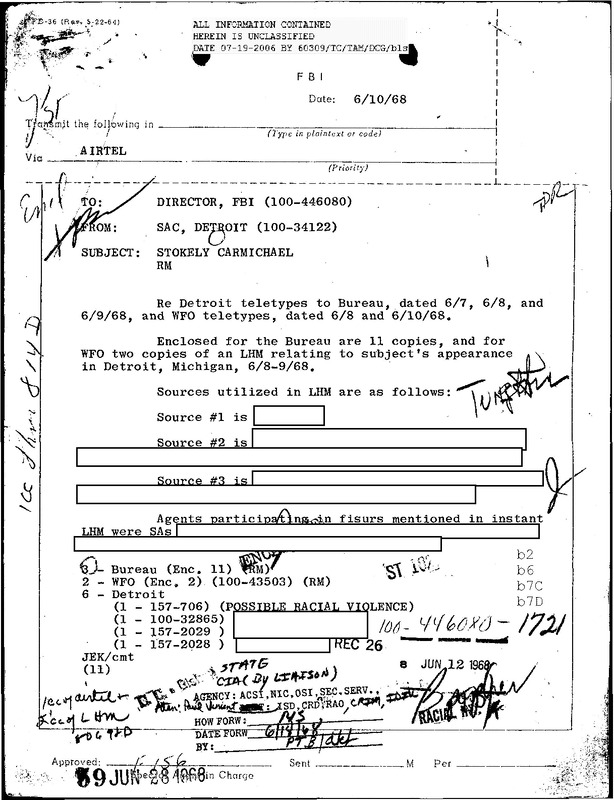
This document details FBI surveillance of Stokely Carmichael during his visit to Detroit from June 7–10, 1968, including informant and agent efforts to track his schedule and reconstruct his speech despite increased security. Carmichael’s remarks continued his sharp criticism of U.S. oppression domestically and internationally.
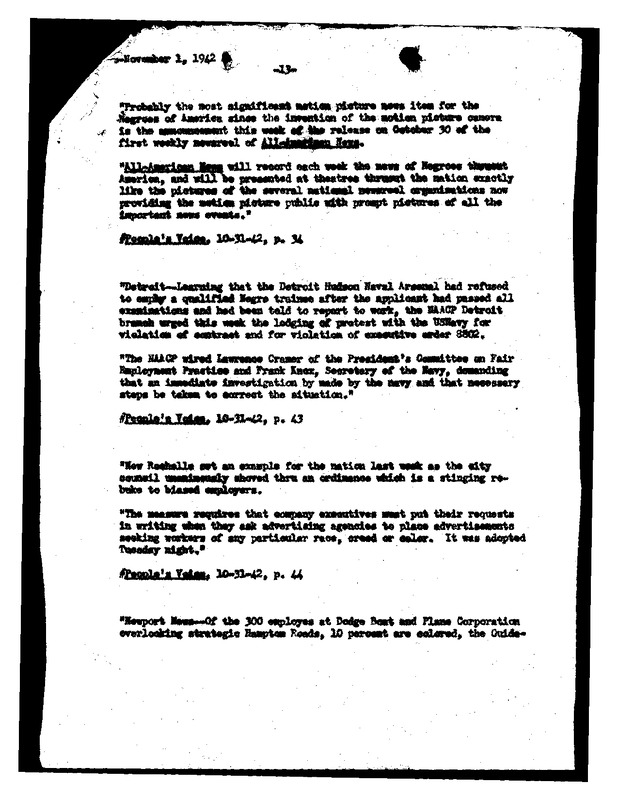
Single page from a longer report, highlighting direct quotes from the Black publication The People’s Voice. The selected quotes pertain to mistreatment of Black Americans.
Several pages listing COINTELPRO files reported "missing" to the Bureau and communications between FBI officials attempting to find them. This set of documents also contains an article highlighting the blowback of the FBI’s COINTELPRO program, after declassified records revealed the FBI sent anonymous letters to State Legislators and U of M Regents to disrupt the “New Left”, resulting in 3 U of M teachers/faculty members being released.
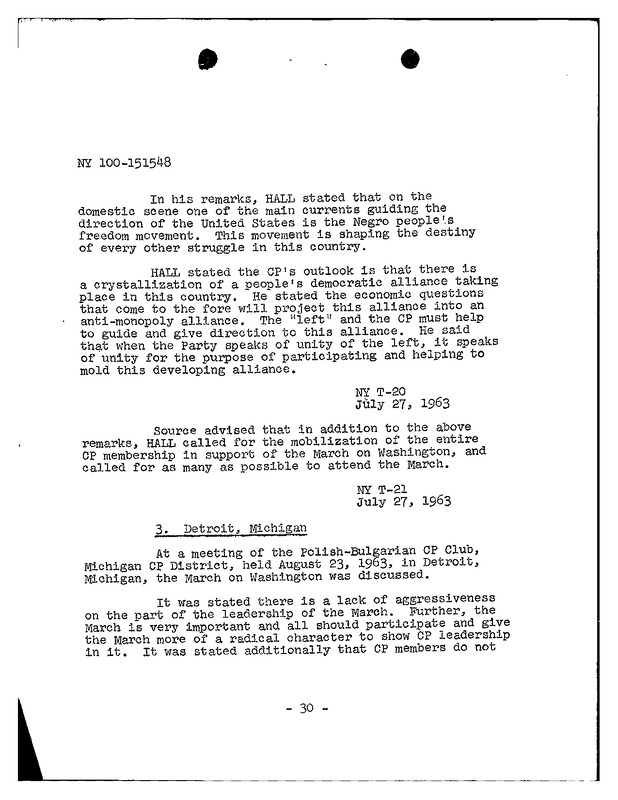
This document features informant reports on Gus Hall’s statements in New York about growing democratic alliances and the Communist Party’s role in uniting the left. It also covers discussions at a Detroit CPUSA meeting regarding party involvement in the March on Washington and similar organizing efforts underway in Philadelphia.
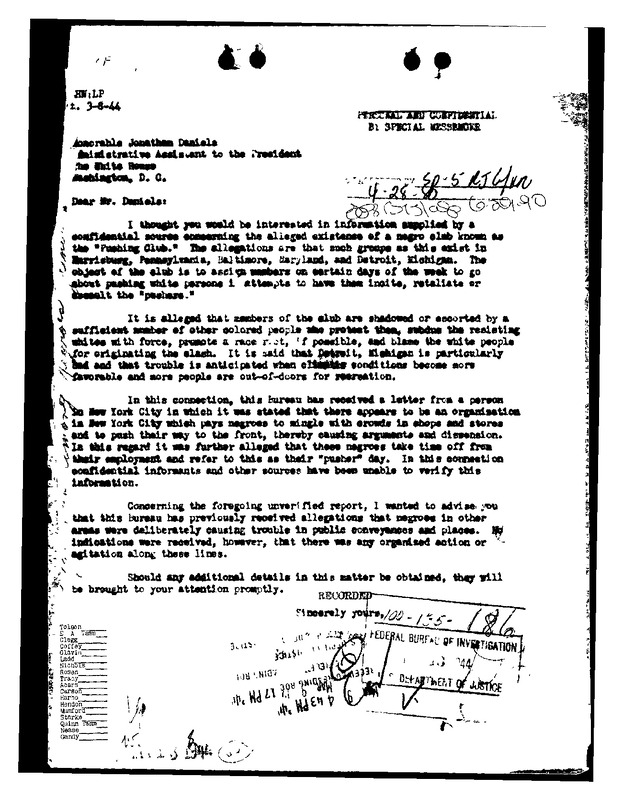
Series of memos sent from J. Edgar Hoover to various contacts in U.S. government alerting them of supposed “Pushing Clubs” that were popping up in cities across the United States. A confidential informant alerted Hoover that groups of Black folks would shadow a “pusher”, someone that would push whites, in hopes they would respond and incite a race riots. These individuals were allegedly paid by another group that had yet to be determined. Hoover was looking into the matter, but was unable to verify the accuracy of these claims and was requesting additional details if they arose.
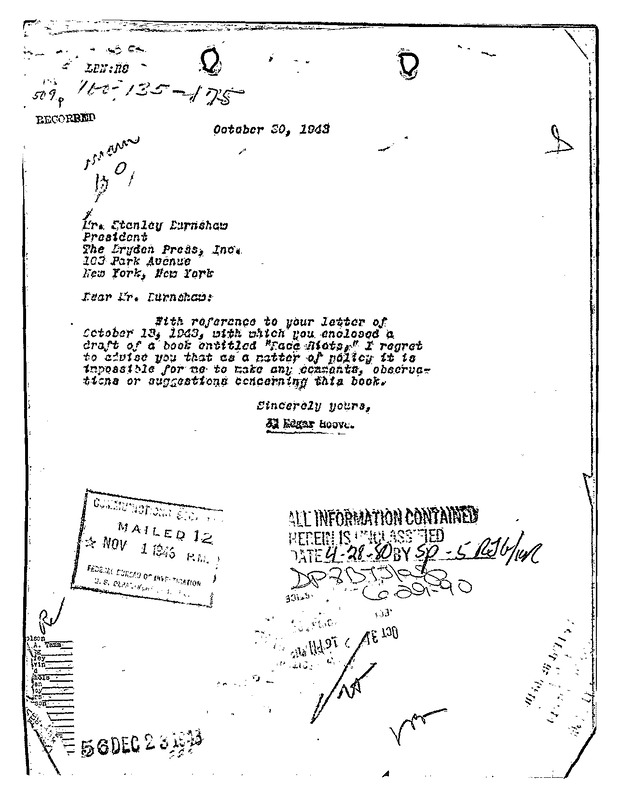
Response directly from J. Edgar Hoover to Stanley Burnshaw, who had requested his, and the FBI’s, opinion of the book “Race Riot” written by Alfred Lee and Norman Humphrey and discussing the Detroit Race Riot of 1943.